Short answer
Mostar suits most months, but it is a hot place in summer and the best time depends on what you want. Go in July or August if you want the waterfalls at their longest hours and the diving competition. Go in May, June or late September if heat bothers you: days are still warm and long, without the 33 C averages of high summer.
Summer: very hot
The climate table for Mostar gives an average high of about 33.0 C in July and 33.5 C in August. The record high is 46.2 C, in July. The town sits at an elevation of 60 m, near the river, so there is no cooling from altitude.
In practice that shapes the day. Plan sightseeing for the early morning and the evening, and keep the middle of the day for shade, a long lunch or the water. Take a hat and a refillable bottle. Day tours from the coast run 10 to 12 hours, so their groups reach Mostar in the middle of the day. Early mornings and evenings in the Old Town are calmer, which is a good reason to stay the night.
The diving competition
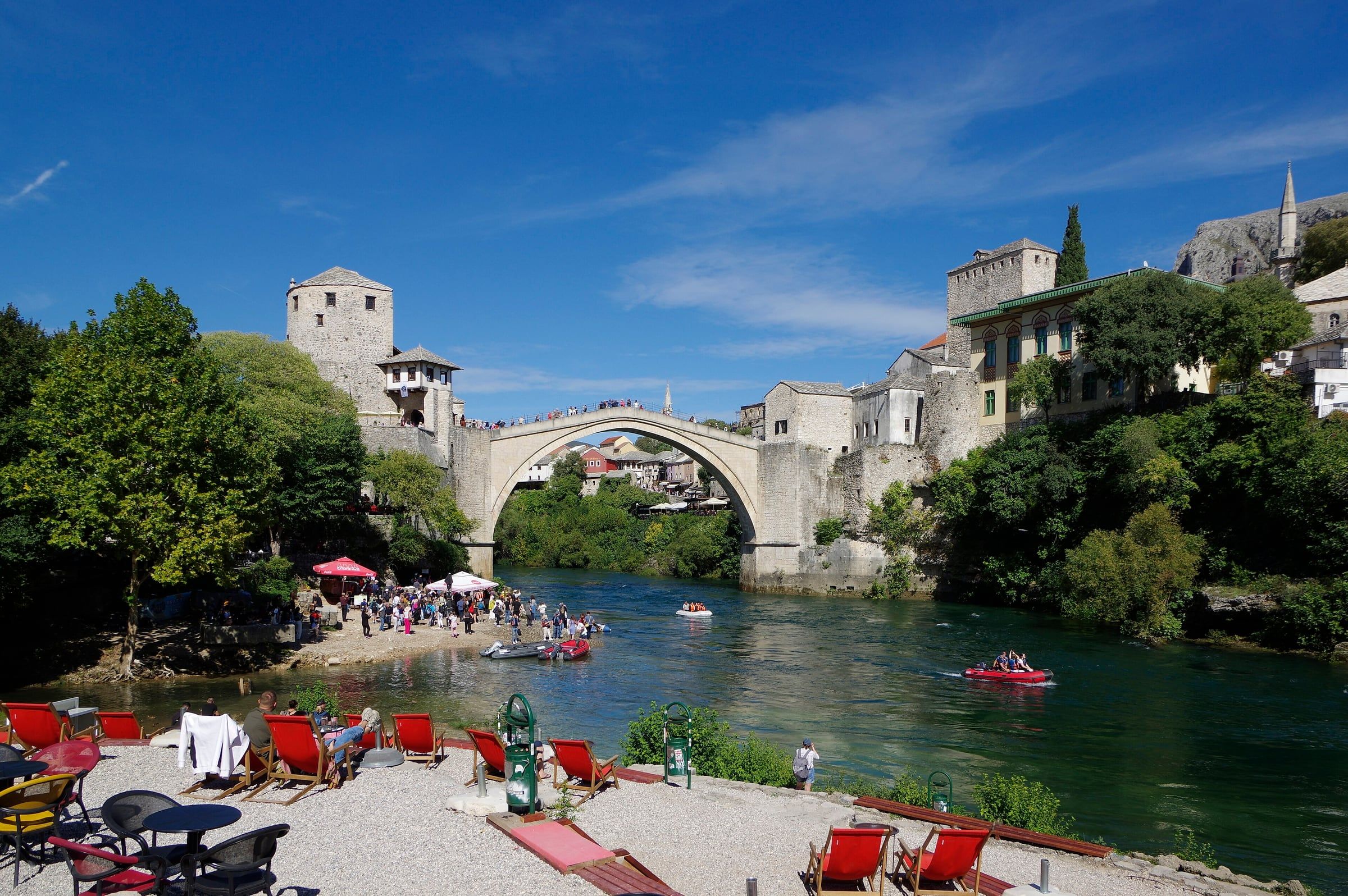
The annual bridge diving competition is held at midsummer, around the end of July. A formal competition began in 1968 and has run every summer since. Red Bull Cliff Diving World Series has stopped in Mostar since 2015.
Watching is one thing. Jumping is another. The UK government says diving off the Mostar bridge is dangerous and has caused serious injuries and deaths, so do not copy the divers. The Old Bridge page explains the tradition. Dates and ticket arrangements change each year, so check local listings for the one you want.
Kravice waterfalls by month
Kravice is the reason many people ask about the season. The official visitor page lists opening hours by month:
| Months | Hours |
|---|---|
| January, February, November, December | 07:00 to 17:00 |
| March, April | 07:00 to 18:00 |
| May | 07:00 to 20:00 |
| June to September | 07:00 to 22:00 |
| October | 07:00 to 19:00 |
Entry is a single price for the site. The official list shows 20 KM for adults, with no separate off-season price. Parking for cars is 3 KM per started hour or 6 KM for the day. Swimming is at your own risk. The park accepts no liability for injuries or theft, and warns about landslides.
The park does not state a swimming season, so we will not invent one. The sensible reading is that bathing makes the most sense in the long, hot days from June to September, when the park is open until 22:00. Outside that window, check the weather on the day. The Kravice page has more.
Shoulder months
Spring and autumn are the comfortable months. The 1991 to 2020 averages give highs of about 20 C in April, 25 C in May, 27 C in September and 21.5 C in October. Autumn is wetter than spring, though: average rainfall more than doubles from August (about 58 mm) to September (about 137 mm) and October (about 151 mm). Kravice stays open until 18:00 in March and April, 20:00 in May and 19:00 in October, so the waterfall is easy to fit into a day.
If summer heat is the thing you want to avoid, May and early June are the best balance of warmth, dry weather and long opening hours.
Winter
From November to February Kravice opens from 07:00 to 17:00, the shortest hours of the year. Winter tyre rules apply on Bosnian roads from November to April, which matters if you hire a car. The getting there page has the paperwork.
Winters are mild but wet. Average highs are about 9 C to 11.6 C from December to February, and November and December are the wettest months, with around 180 mm of rain each on average. Opening hours for smaller museums can be shorter out of season, so check ahead for anything you have set your heart on.
Choosing your dates
- Hot weather, long days, diving: late July, with a plan for the heat.
- Waterfall with the longest hours: June to September.
- Avoiding the worst of the heat: consider spring or October, and check the forecast.
- A short break with fewer guesses: book one night, then see the itinerary and where to stay.
Packing and planning notes
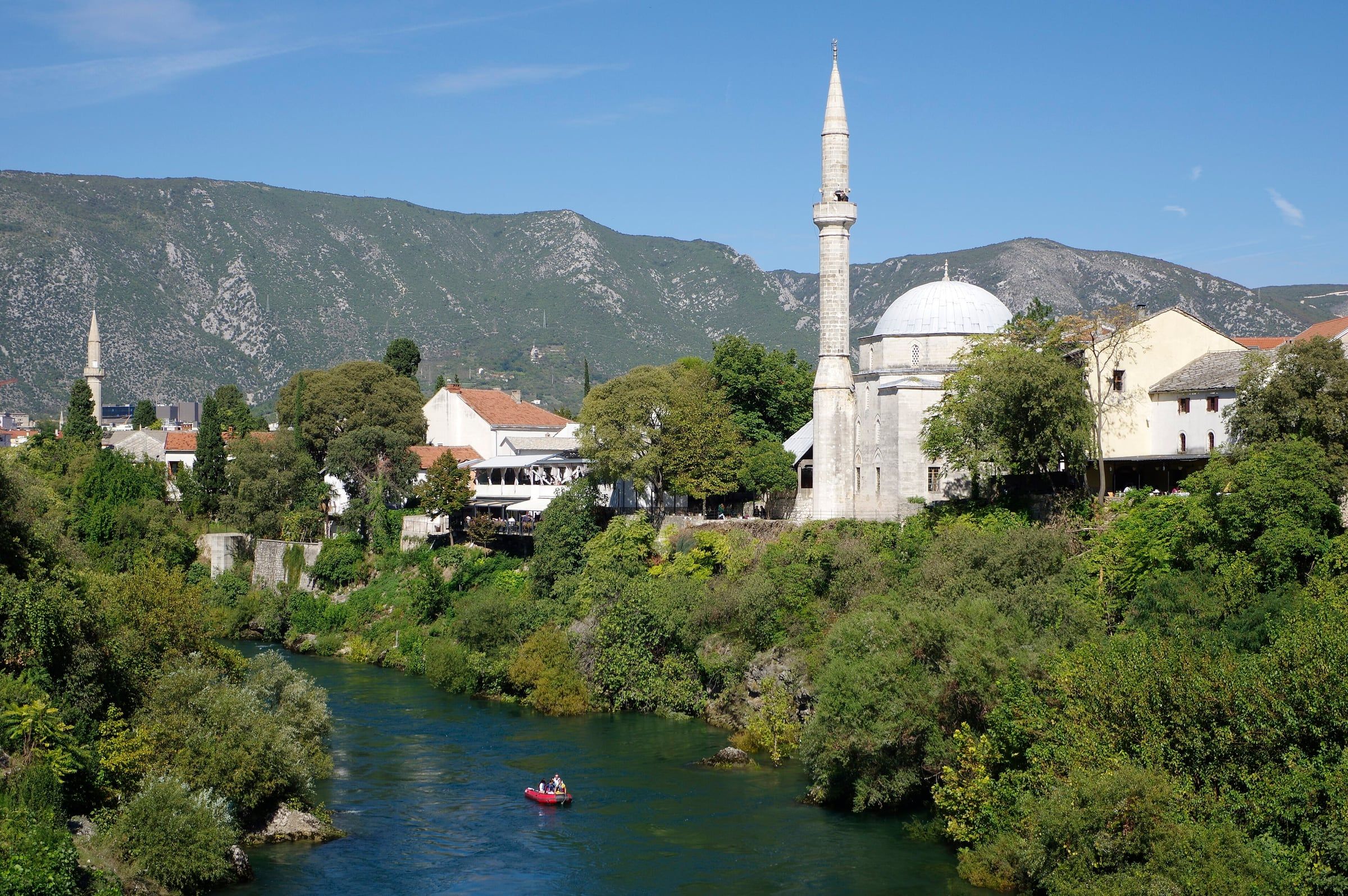
For summer, bring sun protection and plan water stops. For any season, bring shoes with grip, because the bridge and lanes are stone. For the mosques and for Blagaj, covered shoulders and knees are the respectful choice.
Money is in convertible marks (KM), pegged at EUR 1 to 1.95583 BAM, and several local fees quoted here are in KM. UK visitors need no visa for up to 90 days in any 6 months, per GOV.UK, and the getting there page has the rest. If you are coming from the coast, the Dubrovnik page compares the ways to reach the town, and the day tours page lists the tours.