Before you read
Mostar’s recent history is painful for many of the people who live here, and accounts differ on who did what. We have kept to a short outline based on Wikipedia’s summary of the sources, and we attribute claims where they are contested. This is a travel guide, not a history of the war. Read more before you come if the subject matters to you.
The war in outline
1992. Bosnia and Herzegovina declared independence in the spring of 1992. In early April, the Yugoslav People’s Army and Bosnian Serb forces began shelling Mostar. Bosnian Croat forces (the HVO) and Bosniak forces (the ARBiH) resisted together. The Croatian Army and the HVO launched an offensive in June 1992, and Wikipedia says Serb forces had been pushed out of the city by 21 June. About 90,000 of Mostar’s 120,000 residents fled during this period, according to the same summary. Many buildings were damaged, including the Catholic cathedral, the Franciscan church and 12 of the city’s 14 mosques.
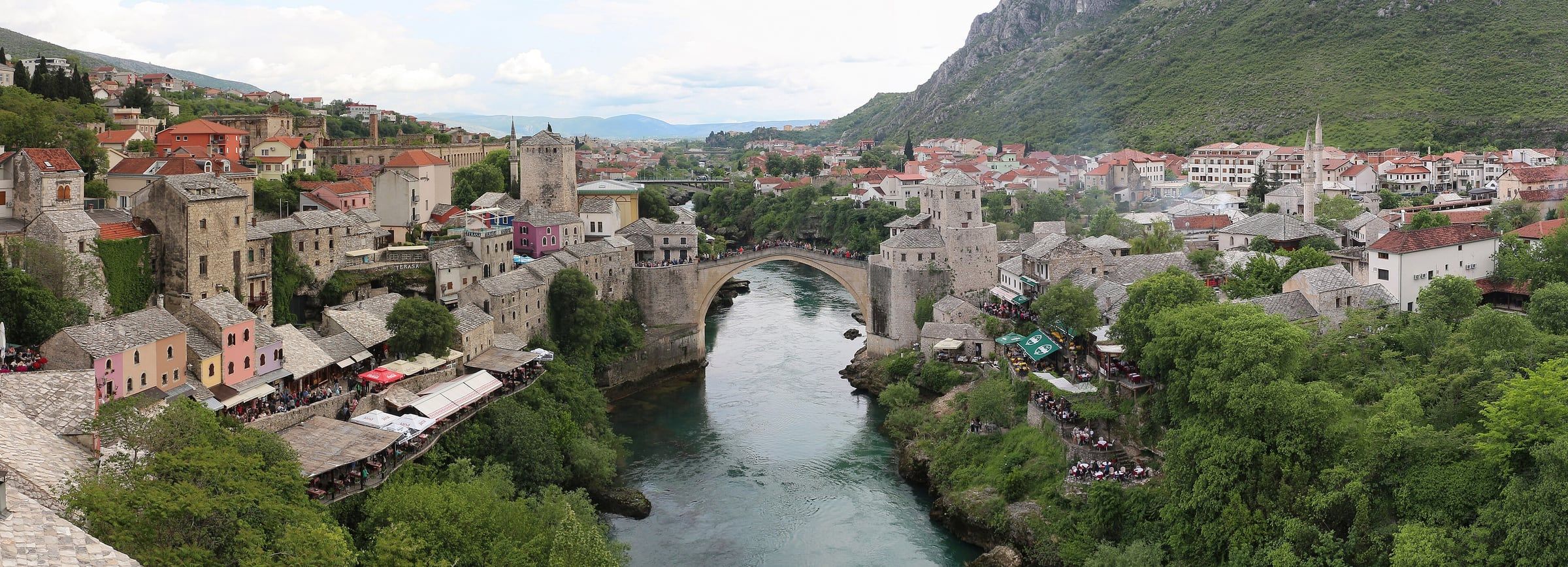
1993 to 1994. The former allies then fell out. Fighting between Croat and Bosniak forces began on 9 May 1993. Wikipedia says observers blamed the HVO for starting it, though it notes the evidence is divided. From June 1993 to April 1994 the HVO besieged East Mostar, where the Bosniak population was concentrated. Wikipedia cites the International Criminal Tribunal for the former Yugoslavia (the UN court that tried wartime crimes, or ICTY) as finding that this siege caused many civilian deaths, cut off humanitarian aid and damaged or destroyed ten mosques. The city was divided, with Croats mainly in the west and Bosniaks in the east, on either side of the Neretva.
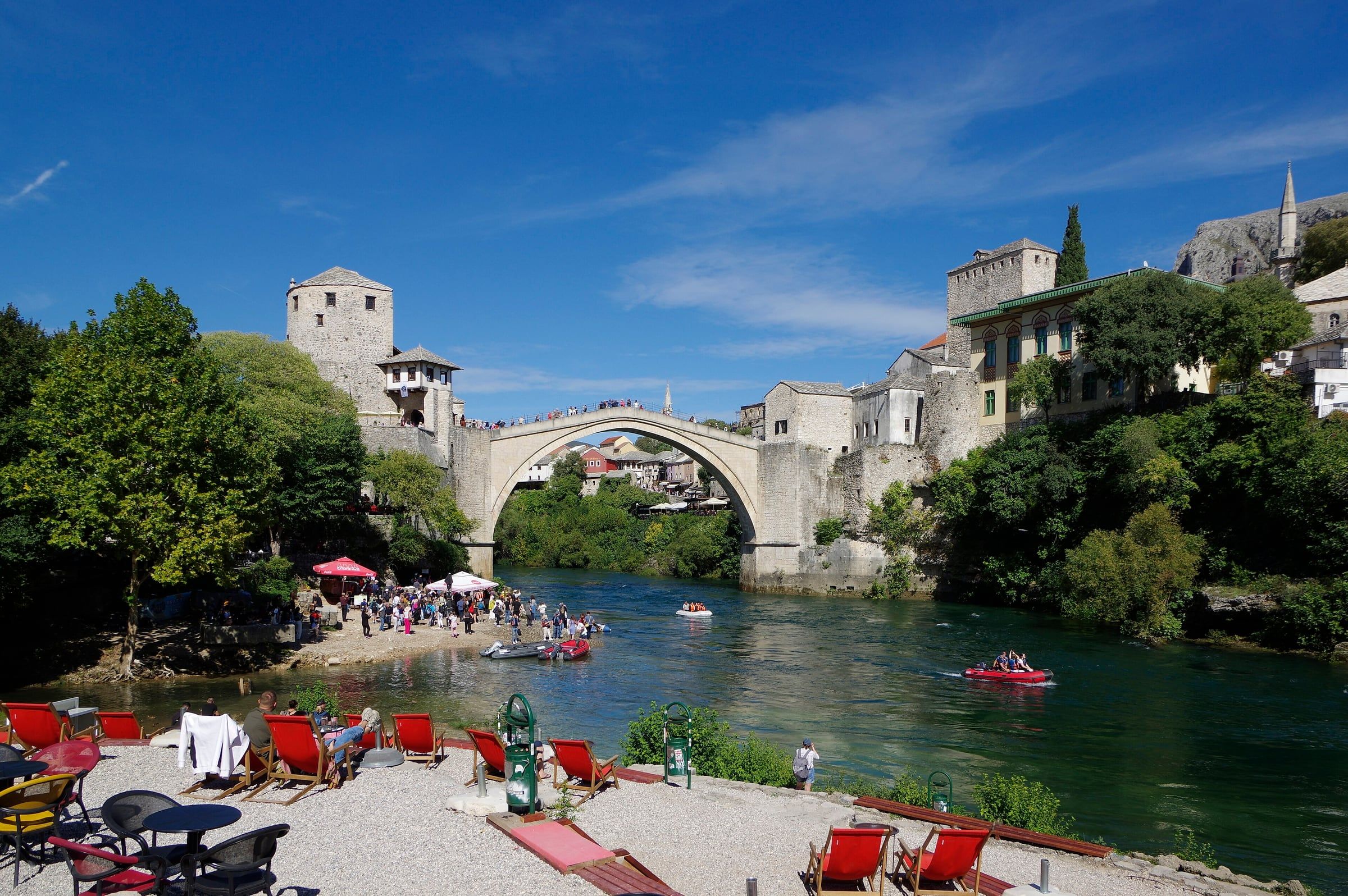
The Old Bridge fell on 9 November 1993 after being shelled. The ICTY found it was a legitimate military target, but that its destruction caused disproportionate damage to the Bosniak civilian population. In a separate opinion, the presiding judge wrote that the video footage could not prove beyond reasonable doubt who caused the final collapse. See the Old Bridge page for how it was rebuilt.
1994 to 1995. A ceasefire signed on 18 March 1994 ended the Croat-Bosniak war, following a provisional federation agreement reached in Washington on 1 March. Wikipedia says the city then came under temporary EU administration. The Dayton Agreement ended the wider Bosnian War in 1995.
The toll. Estimates differ. One source in the Wikipedia summary puts deaths during the siege at about 2,000. The Research and Documentation Center in Sarajevo counted 2,501 deaths in Mostar across the whole war, 867 of them civilians. The ICTY’s first-instance verdict in 2013 found that thousands of Bosniaks and other non-Croats were expelled from western Mostar, and Wikipedia reports that the city’s ethnic makeup changed markedly during the war.
Places to learn more
Museum of War and Genocide Victims
The museum is at 130 Maršala Tita Street. Guides report that tickets are bought at the door in cash, but we have not verified the fee or opening hours. Ask locally before you go.
The war photo exhibition
A small exhibition of about 50 wartime photographs is reported to be in the western Old Bridge tower, according to secondary sources. We have not verified its fee or hours. The tower is beside the Old Bridge.
Partisan Memorial Cemetery
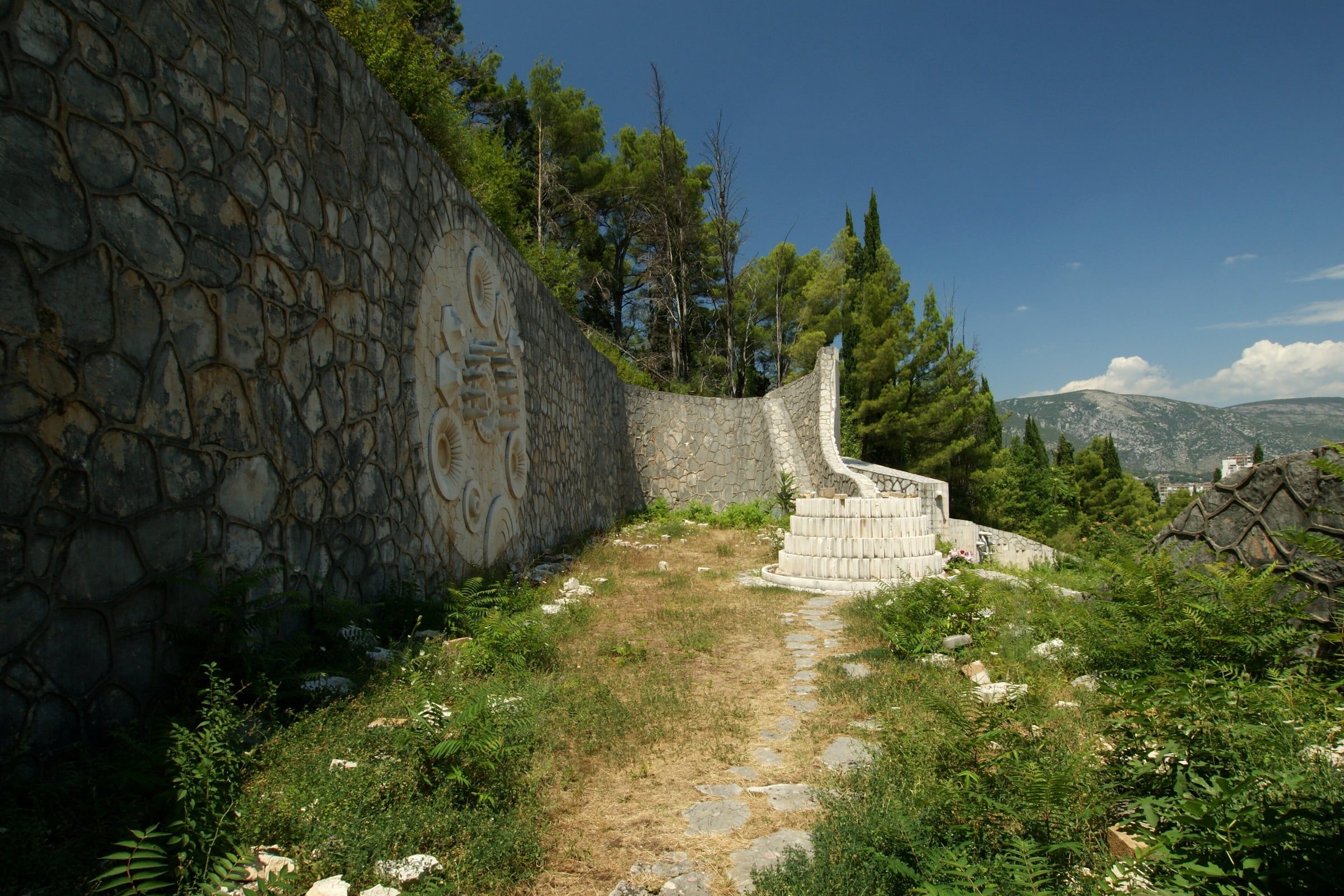
This is not about the 1990s, but it belongs on the page. The Partisan Memorial Cemetery is on the slopes of Hum hill at Bijeli Brijeg, above the Neretva. The architect Bogdan Bogdanović designed it as a memorial to the Yugoslav partisans of the Second World War. Work ran from 1959 to 1965, and sources give 25 September 1965 as the opening date. It was listed as a national monument of Bosnia and Herzegovina in January 2006.
Wikipedia gives 810 burials, 92 of them unknown, though other sources give different numbers. Architectuul says the cemetery was badly damaged in 1992 and went on deteriorating after the war. The terraced stone walls carved with circular motifs in our hero photo are typical of Bogdanović’s work. We have no verified information on opening hours, fees or the current state of the paths, so check locally. Treat it as a place for quiet reflection.
What we have left out
Do not go inside damaged or derelict buildings.
A safety warning on landmines
The UK government’s travel advice says landmines remain from the 1992 to 1995 war in rural and less populated areas. Do not step off roads and paved areas without an experienced guide. This matters if you walk or hike in the hills outside town, not on the Old Town streets.
A guided history walk
A local guide gives you what a page cannot: names, streets and personal accounts. The Death of Yugoslavia thematic walking tour listed below runs about two and a half hours and covers war history in Mostar. We list it because it fits this page, not because we have taken it ourselves. Our day tours page lists trips that include Mostar, and the Old Town page covers the sights you can visit on your own.
Visiting with care
- Ask before photographing people.
- Many residents lived through these years. Avoid asking strangers which side they were on.
- Keep to paved paths outside the town.
- If you are planning a longer stay, see getting there and where to stay.
How to fit this into a visit
Most visitors to Mostar spend a few hours, and the war is easy to miss because the Old Town has been rebuilt so carefully. A local guide is the best way to have the traces pointed out.
If you have only a couple of hours, we would suggest the Old Bridge, which carries the story in a single place, followed by a guided walk if you can arrange one. With a full day, add the Museum of War and Genocide Victims and the war photo exhibition. If you are staying overnight, the Partisan Memorial Cemetery is a short trip from the centre, and our Mostar itinerary gives a sample order. These timings are our own suggestions.