The short version
UK visitors can enter Bosnia and Herzegovina without a visa for tourism, for up to 90 days in any 6 months, on a passport that meets the validity rules below. That is the position on GOV.UK as we checked it on 25 October 2026. Rules change, so read GOV.UK’s entry requirements page before you travel, and see practical information for Mostar for the rest of the planning.
This is general information from an independent guide, not official advice. We have verified the UK position only. If you hold another passport, check your own government’s travel advice.
UK visitors: the rules
From GOV.UK’s entry requirements for Bosnia and Herzegovina:
- Visa. None is needed for tourism for up to 90 days in any 6 months.
- Passport issue date. Your passport must have been issued less than 10 years before the day you arrive. GOV.UK gives an exception for passports issued before October 2018.
- Passport expiry. It must expire at least 90 days after the day you leave.
- Stamps. Get a stamp in your passport when you enter and when you leave. GOV.UK says travelling without an exit stamp can mean a fine.
- Police registration. Foreign nationals must register with the police within 72 hours of arrival. Hotels usually do this for you, and so do some hostels. If you stay in private accommodation, ask your host who is responsible.
- Customs. GOV.UK says the customs rules are strict and points to the Indirect Taxation Authority at uino.gov.ba.
Check the dates on your passport at home, not at the border. If it is close to the 10-year limit, a renewal costs less than a refused entry.
Children travelling without both parents
GOV.UK says that anyone aged 17 or under who is travelling without both parents needs a notarised letter of permission. The practical cases are a child with one parent, a school trip, or a child travelling with grandparents or friends. Read the current GOV.UK wording and have the letter ready before you leave, because an airline or a border officer can ask for it.
The EU Entry/Exit System on the Croatian side
Bosnia and Herzegovina is not in the EU or the Schengen area, and it is not part of the EU Entry/Exit System (EES). Croatia is in the Schengen area, so the Croatian side of the border is a different matter.
The European Commission says the EES launched in stages from 12 October 2025 and became fully operational on 10 April 2026. It replaces passport stamping at the external borders of the 29 participating European countries for non-EU short-stay visitors. It records your name, travel document details, fingerprints and a facial image, along with the date and place of each entry and exit.
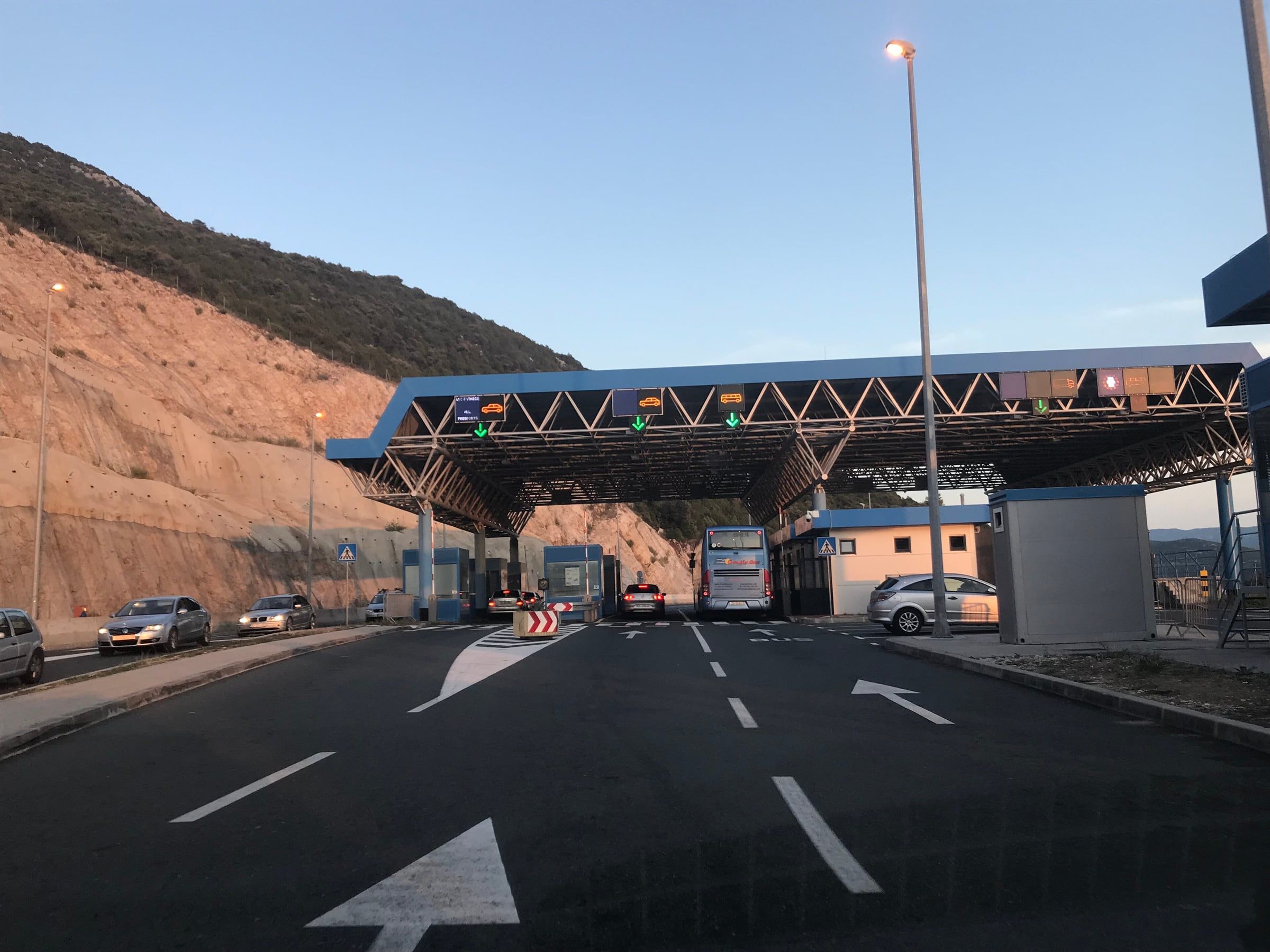
For a Mostar trip, this means that entering Croatia from Bosnia is an EES border. GOV.UK’s main advice page says the EES may cause longer waits on journeys to or from the Schengen area. If you have a flight or a ferry on the evening you leave Mostar, leave plenty of slack.
We could not verify a start date for ETIAS, the separate EU travel authorisation scheme, so we say nothing about it. Check the Commission’s pages if you are planning far ahead.
US and EU visitors
For US citizens, we found only a secondary summary of the US State Department’s advice, because its own pages did not load for us. It says no visa is needed for up to 90 days in six months and that a passport should be valid for at least three months beyond departure. Treat that as unconfirmed, and read the State Department’s page for Bosnia and Herzegovina before you travel.
We have not verified the rules for EU citizens from an official source. Check your own government’s travel advice, or the Bosnian Ministry of Foreign Affairs at mvp.gov.ba.
Day trips from Dubrovnik or Split
Most coastal day trips to Mostar cross the Croatia-Bosnia border by road, so take your passport. Neum is a short Bosnian coastal strip that cuts Croatia’s Dubrovnik-Neretva County in two. The Pelješac Bridge, which opened on 26 July 2022, lets Croatian road traffic skip the Neum crossing, but road traffic between Dubrovnik and Mostar still crosses the border.
Border formalities add time to every Croatian journey. FlixBus lists a minimum of 3 h 15 for Dubrovnik to Mostar and 3 h 30 for Split to Mostar, and we cannot say which crossing a given bus uses. Our guides to Mostar from Dubrovnik and Split to Mostar cover those routes, and the day tours page shows tours that handle the journey for you.
If your trip continues to Montenegro, the rules there are separate. Our Mostar to Kotor page covers them.
Driving across the border
If you drive, the entry rules are only part of it. GOV.UK says you need the 1968 International Driving Permit as well as your UK licence if you hire or use a vehicle inside Bosnia and Herzegovina, and you must get it in the UK before you travel. It is illegal to drive without at least third-party insurance, and Border Police can ask for printed proof. Our getting there page covers the rest of the driving advice.
Before you go
- Read GOV.UK’s entry requirements page again in the week before you travel.
- Check that your passport meets both the issue-date and the expiry rules.
- Allow extra time for the border, especially on the day you return to Croatia.
- Ask your accommodation to confirm that it will register you with the police.
- Keep your passport with you on any day trip, and not in a hotel safe or a bag stowed in the luggage hold of a coach.
- Note that this page is due for review in April 2027, because entry rules change.