The short answer
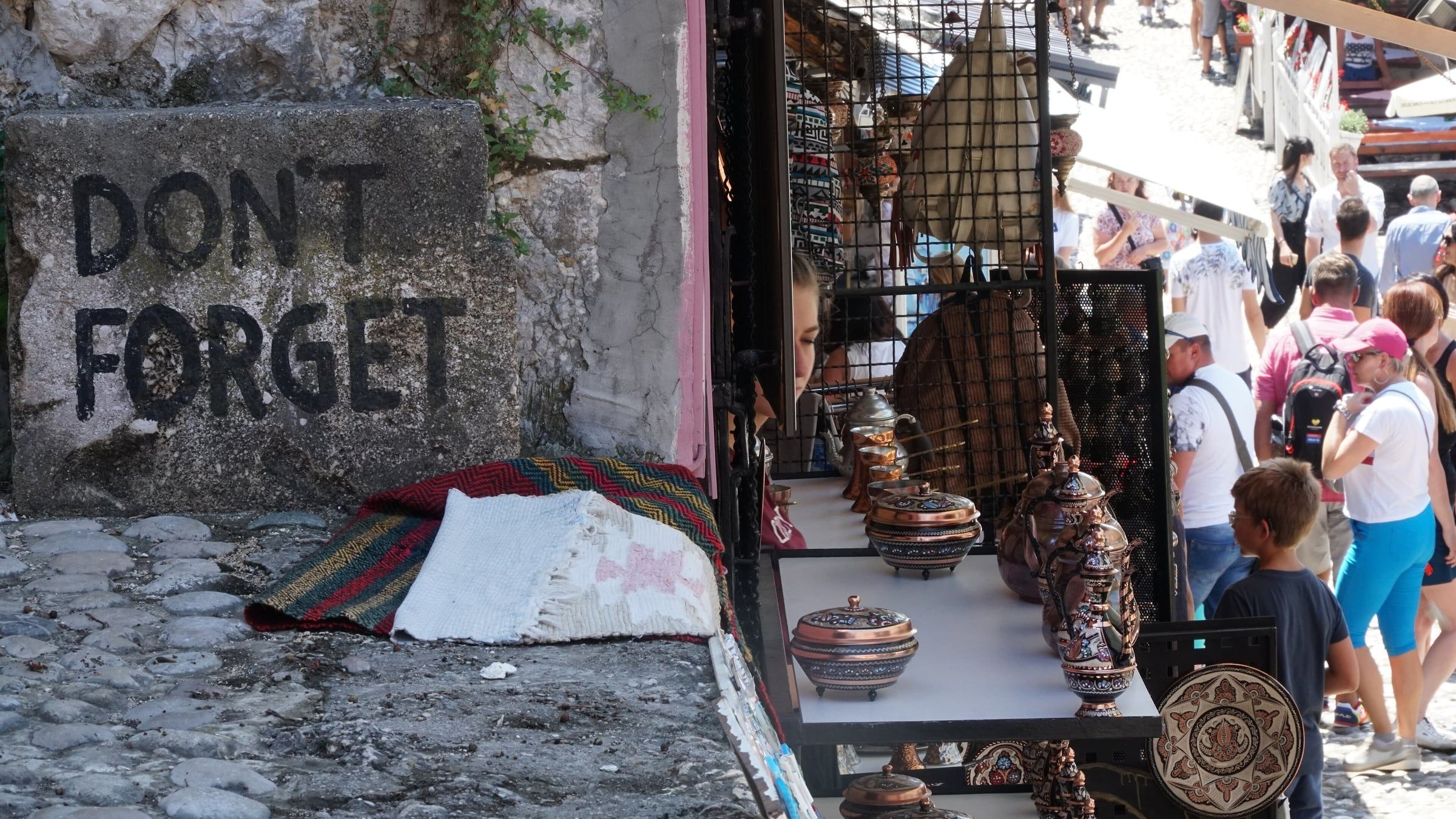
Most visitors to Mostar have an uneventful trip. The old town is busy with tourists by day, the main streets are well used, and the real hazards are the ordinary ones: bags left unwatched, strong summer sun and a small number of risks that come from the 1992 to 1995 war.
This page follows the UK government’s travel advice for Bosnia and Herzegovina, which we checked on 25 October 2026. It is an independent guide, not official advice, so read the GOV.UK safety page before you travel, because it changes. For the rest of the trip basics, see practical information.
Crime and pickpockets
GOV.UK reports pickpockets and bag-snatchers on public transport and in the tourist areas of Sarajevo and other cities. Mostar’s old town is a tourist area, so treat it the same way.
- Keep your phone and wallet in a front pocket or a zipped bag, not hanging loose on a chair.
- Carry a photocopy or photo of your passport page rather than the passport itself, and keep the original in your accommodation.
- Take care in crowds on and around the Old Bridge, where people stop to take photos.
GOV.UK also notes that car thefts have increased around Sarajevo, and that violence between organised crime groups can occur, but that you are unlikely to be targeted. If you are driving, the car hire and driving guide covers the rules.
Terrorism and demonstrations
GOV.UK does not give a threat level for Bosnia and Herzegovina. Its wording is that terrorist attacks cannot be ruled out, and that attacks could be indiscriminate, including in places visited by foreigners. That is standard language across much of Europe and is a reason to stay informed, not a reason to change your plans.
Demonstrations happen from time to time. GOV.UK describes them as normally peaceful but able to disrupt traffic, and advises avoiding planned political demonstrations. If you see one forming, walk the other way and check with your accommodation for any road closures.
Landmines and leaving the path
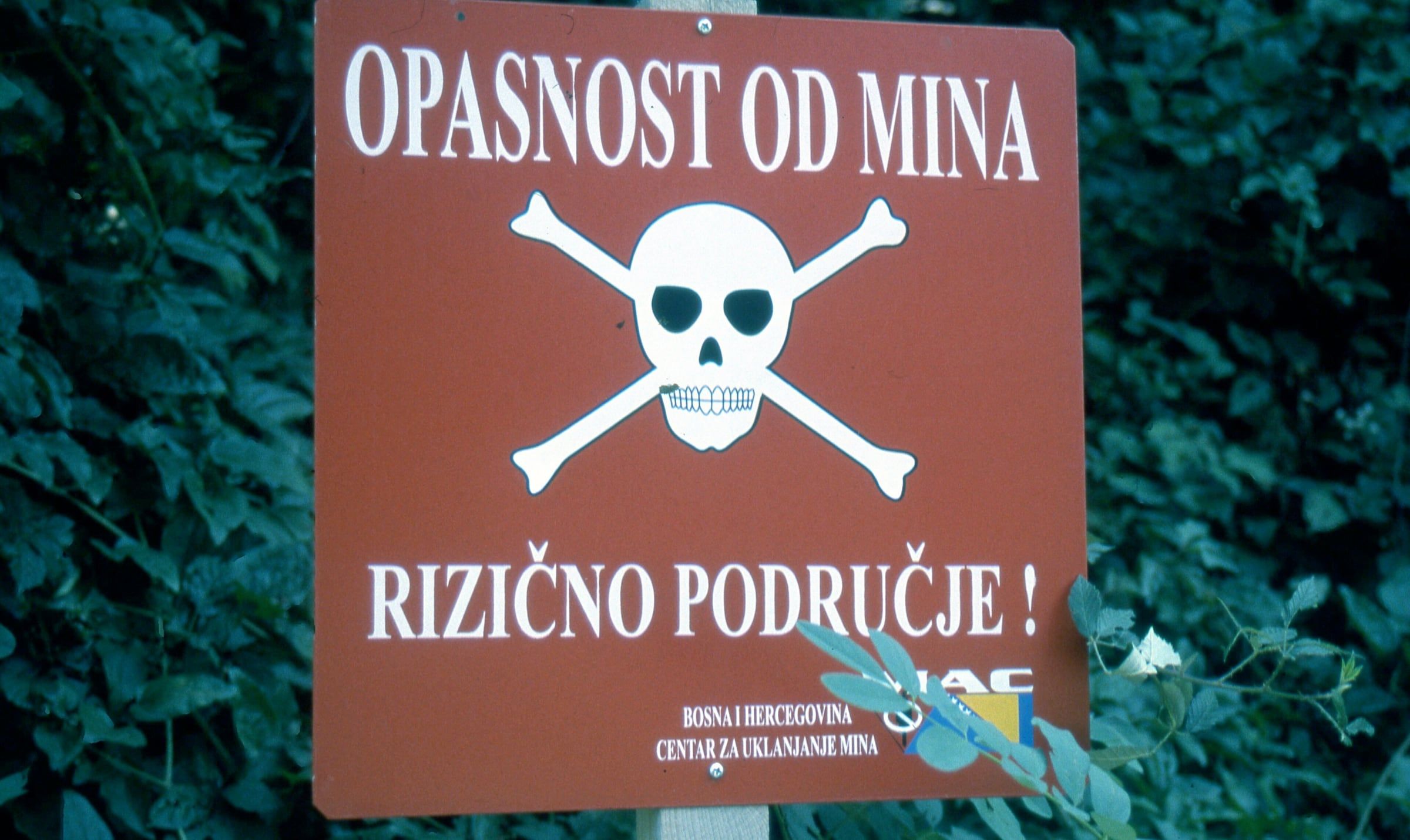
This is the one hazard that is specific to the region. Landmines remain from the 1992 to 1995 war. GOV.UK says major routes and populated areas are largely clear, while rural areas are at risk, and its instruction is plain: do not step off roads and paved areas without an experienced guide. It asks for particular care near former conflict lines, roadsides, abandoned buildings, woods and orchards.
In practice, for a visit to Mostar and the usual day trips, that means:
- Stay on paved roads, marked paths and visitor areas at sights such as Blagaj, Počitelj and Kravice.
- Do not wander into overgrown ground or abandoned buildings, however good the photo looks.
- Do not pull off the road onto an unmarked verge to stop or to park.
- If you want to hike in the hills, go with a local guide who knows the ground.
The Bosnia and Herzegovina Mine Action Centre, known as BHMAC, is the national body for this work. Its website mentions a “Mine-Suspected Areas in BiH” app for Android and iOS, which may be worth a look if you plan to be outside towns. We have not tested the app, and the app is not a substitute for a guide. For the background to why the mines are there, see the war history page.
Diving from the Old Bridge
The bridge is about 24 m above the river, and local divers have jumped from it in an annual competition held at midsummer since 1968. Watching is a highlight for many visitors. Jumping yourself is a different matter. The UK government states that diving off the Mostar bridge is dangerous and has caused serious injuries and deaths. We do not suggest you try it, and nothing here is a how-to. More on the bridge itself is on the Old Bridge page.
Summer heat
Mostar is low-lying, at about 60 m above sea level, and the summers are hot. The average high is about 33.0 C in July and 33.5 C in August, and the record is 46.2 C, set in July. Heat is a more likely cause of a bad afternoon than crime.
- Do your walking in the morning or the evening and rest in the middle of the day.
- Carry water, and wear a hat and sunscreen on the stone streets, which have little shade.
- If you are visiting in July or August, read best time to visit before you book.
Health and emergency numbers
GOV.UK gives 112 as a general emergency number and 124 for an ambulance. We could not confirm a police number from the UK government pages, so ask your accommodation to write down the local one for you.
On health, GOV.UK says the UK GHIC and the EU EHIC do not cover Bosnia and Herzegovina, and it advises travel insurance that covers local treatment and medical evacuation. Facilities are more limited outside Sarajevo and the larger towns. Pharmacies may not recognise UK prescriptions, so bring enough of any regular medication. GOV.UK also lists ticks and biting insects as health risks, so cover up on any countryside walk. For more, see the phones and SIM cards page, which helps you stay reachable, and entry requirements for paperwork.
Day trips and getting around
Most day trips from Mostar stay on main roads and visitor areas: Blagaj, Počitelj and the Kravice waterfalls are all set up for visitors. The risks there are the ordinary ones. At Kravice the official rules say swimming is at your own risk, the park accepts no liability for injuries or theft, and visitors should take care with landslides. Do not leave valuables in a parked car or on the shore while you swim.
If you hire a car, GOV.UK says you need the 1968 International Driving Permit as well as your UK licence, and it is illegal to drive without at least third-party insurance. Winter tyre rules apply from November to April. The getting there page covers the routes in and out of the city.
If you would rather not think about any of this, a guided day trip handles the roads, the stops and the paths for you. The where to stay page helps you choose a base.
A sensible checklist
- Read the GOV.UK safety and health pages in the week before you travel.
- Buy travel insurance that covers medical treatment and evacuation.
- Watch your bag in crowds and on public transport.
- Stay on roads and paved areas, and take a guide for anything off them.
- Watch the bridge divers; do not join them.
- Plan around the midday heat from June to August.