The short version
Bosnia and Herzegovina uses the convertible mark, written KM. Its international code is BAM, and it is pegged to the euro. Carry some KM in cash for small payments, and keep the euro for the Croatian side of any trip. For the wider picture, see practical information for Mostar.
This is general information from an independent guide, not official advice. Exchange rates and fees change, so check current figures before you travel.
The convertible mark
The convertible mark was introduced on 22 June 1998. Its symbol is KM and its code is BAM. It is pegged at EUR 1 to 1.95583 KM, and the Central Bank of Bosnia and Herzegovina issues it under a currency board arrangement. In plain terms, the central bank ties the local currency to a fixed rate against the euro, so the rate is the same this month as next.
The central bank’s exchange table for 24 October 2026 shows the euro at 1.95583 KM, which matches the peg. As a rough rule for the mental sums, 2 KM is a little over EUR 1. For a more exact figure, divide a price in KM by 1.95583.
We did not find notes and coins described on the pages we checked, so we do not list denominations. You will see them on the first day.
Can you use euros?
We found nothing official on whether shops, cafes or taxis in Mostar accept euros, and prices are quoted in KM. Some businesses that serve tourists may take euros, but do not plan around it. If you pay in euros, expect the seller to choose the rate.
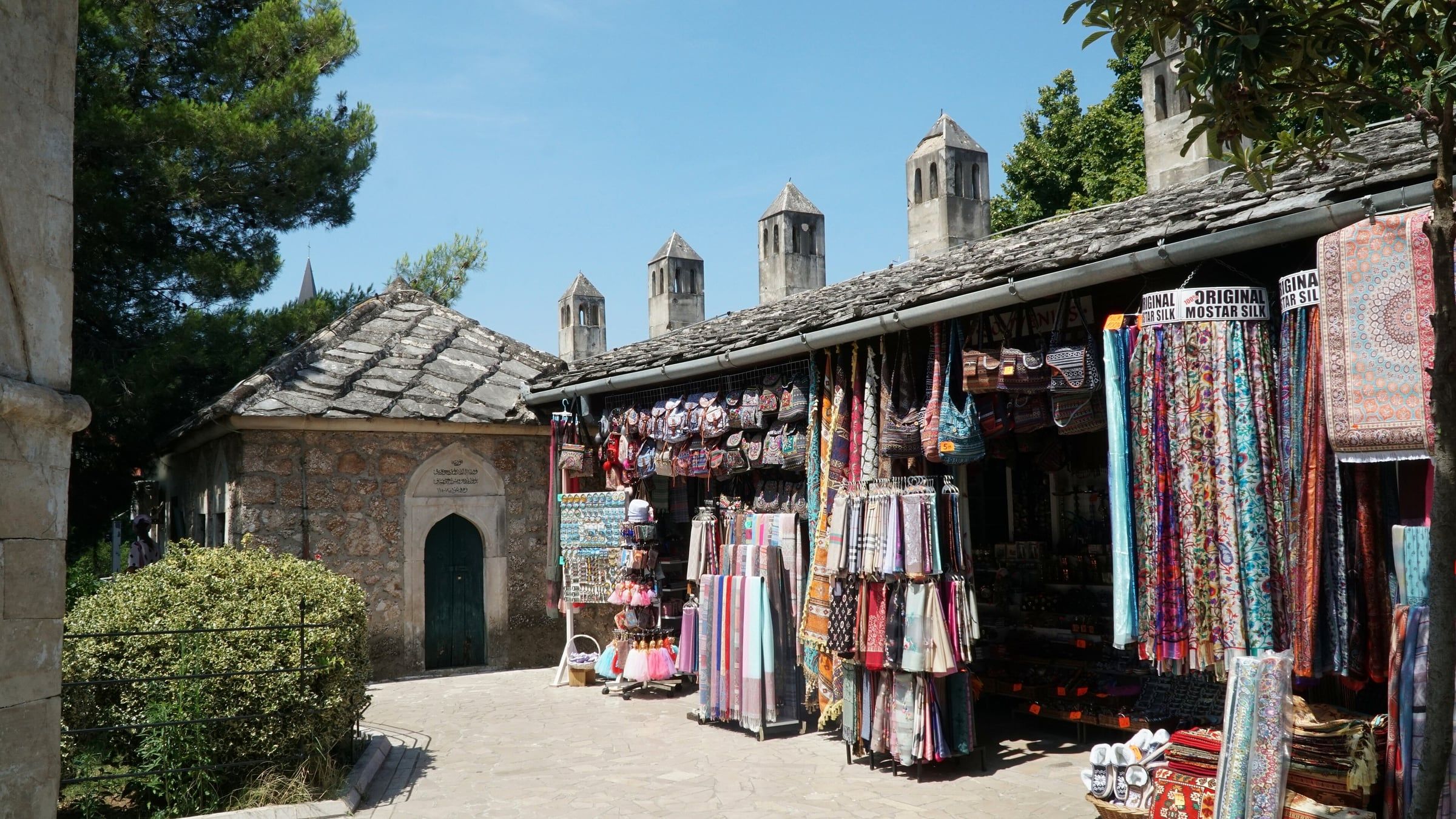
The simplest advice is to carry KM for small payments: a coffee, a bus fare, a tip, a toilet, a market stall. Ask before you order whether a larger bill can be paid another way.
Cash versus cards
We have verified little about card use in Mostar, so here is only what we can support:
- ŽFBH, the railway company, takes online payment by Visa, Mastercard and Maestro for train tickets. Its “how to buy” page describes online purchase only, so we cannot say whether stations sell tickets.
- We have not verified where cards are accepted at shops, restaurants, taxis or museums, and we have not verified ATM availability. Ask your accommodation on arrival.
- GOV.UK advises against showing large amounts of cash in public, which is sensible anywhere.
Before you travel, tell your bank that you are going abroad, and check what it charges for foreign card payments and cash withdrawals. That is a matter between you and your bank, and we have no figures to give.
What things cost in KM
Fees at the main sights are given in KM, which is why carrying some is useful. These are the figures we could verify.
Kravice waterfalls (official price list). Adult entry is 20 KM, which at the peg is about EUR 10. Residents of Bosnia and Herzegovina pay 10 KM, student groups aged 7 to 18 pay 10 KM, and under-7s go in free. The single price also covers the Koćuša waterfall and the Humac monastery museum. See our Kravice waterfalls page for hours and the rules.
Kravice parking (official price list). Cars pay 3 KM per started hour or 6 KM for the day, motorbikes 3 KM per started hour, campers 4 KM and buses 10 KM per started hour or 30 KM for the day.
Old Town museums (secondary source, from a 2026 guide). The Bišćević House is 4 KM, the Muslibegović House museum section 5 KM, and the Old Bridge Museum 8 KM. The same guide gives 10 KM for the Koski Mehmed Pasha Mosque interior and minaret, but visitor reviews we found quote EUR 10, so treat the mosque fee as disputed and ask at the door. The courtyard is free. Read more in our Old Town guide.
We have no verified fee for Blagaj Tekke, the Karađoz Bey Mosque or the war museums, so we give none.
A simple day budget
Using only the verified figures, a day trip by car for two adults to Kravice costs 40 KM in entry plus up to 6 KM for a day of parking, so 46 KM in total, which is about EUR 23.50. Add food and drink on the day, for which we have no verified prices.
For an Old Town day on foot, the entries we can price are small: the Old Bridge Museum at 8 KM each and a house museum at 4 or 5 KM each. Treat these as a guide, since they come from a secondary source. For tours that include fees and transport, the day tours page shows current prices on the cards.
If you are arriving from Croatia
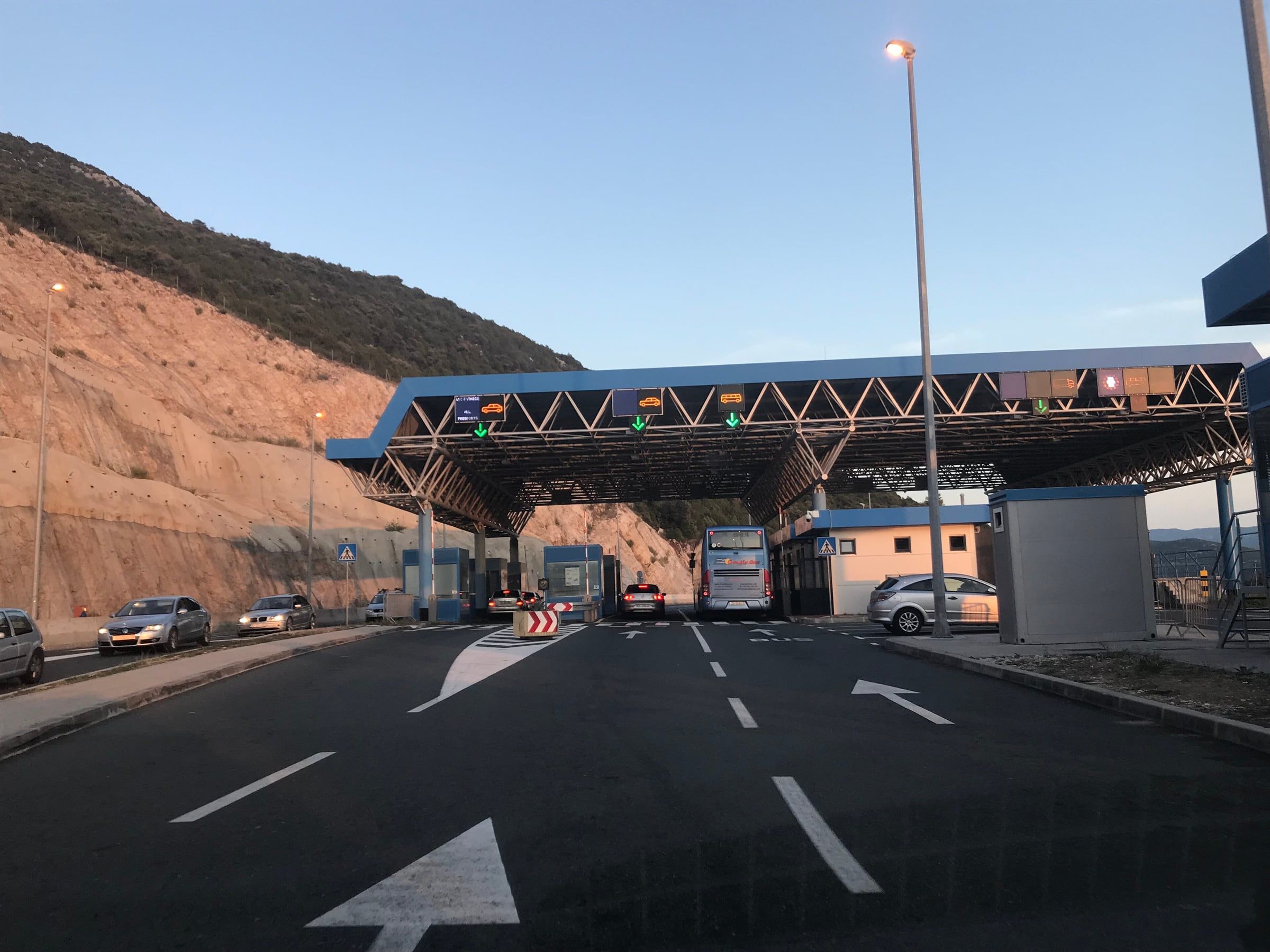
Croatia adopted the euro on 1 January 2023, so a day trip from the coast means changing currency. Euros that work in Dubrovnik or Split will not be the currency of the shops you meet in Mostar. Carry KM for the small payments, such as coffee, entry fees and parking.
If you travel by bus or on a tour from the coast, ask the operator what the ticket covers, so you know what you will pay on the day. Our guides to Mostar from Dubrovnik and Split to Mostar cover the routes, and the entry requirements page covers the border.
Fares we cannot price
Some costs we cannot give you, and we would rather say so than guess. There is no verified fare for the Sarajevo to Mostar train, because the ŽFBH domestic price page was under construction when we looked, so check zfbh.ba before you travel. Bus fares from Split and Dubrovnik change by date, so look at the operator’s page for the day you want. Our getting there page lists the routes and what each involves.
Leftover KM
Plan to spend most of your KM before you leave Bosnia and Herzegovina. We have not verified whether the currency can be exchanged back easily outside the country, so a final coffee or a last round of souvenirs is a safer use of spare notes than carrying them home. If you cross into Croatia, you will be back on the euro.
Practical habits
- Keep small notes for small purchases. We have no source on how easily larger notes are changed.
- Keep a little KM in reserve on the way out, since you will pay parking and fees in it.
- Remember that prices quoted in this guide were checked on the dates shown in the sources, and that official lists change.