What to try first
Bosnian cooking sits between the grill and the oven. Meat is cooked over charcoal, pastry is baked in big round trays, and vegetables are stuffed and simmered for a long time.
If you only have time for a few things in Mostar, make them ćevapi for lunch, a slice of pita from a bakery, a cup of Bosnian coffee in the afternoon, and a glass of local white wine with dinner. The sections below explain each, and where to eat covers the kinds of place that serve them.
Ćevapi
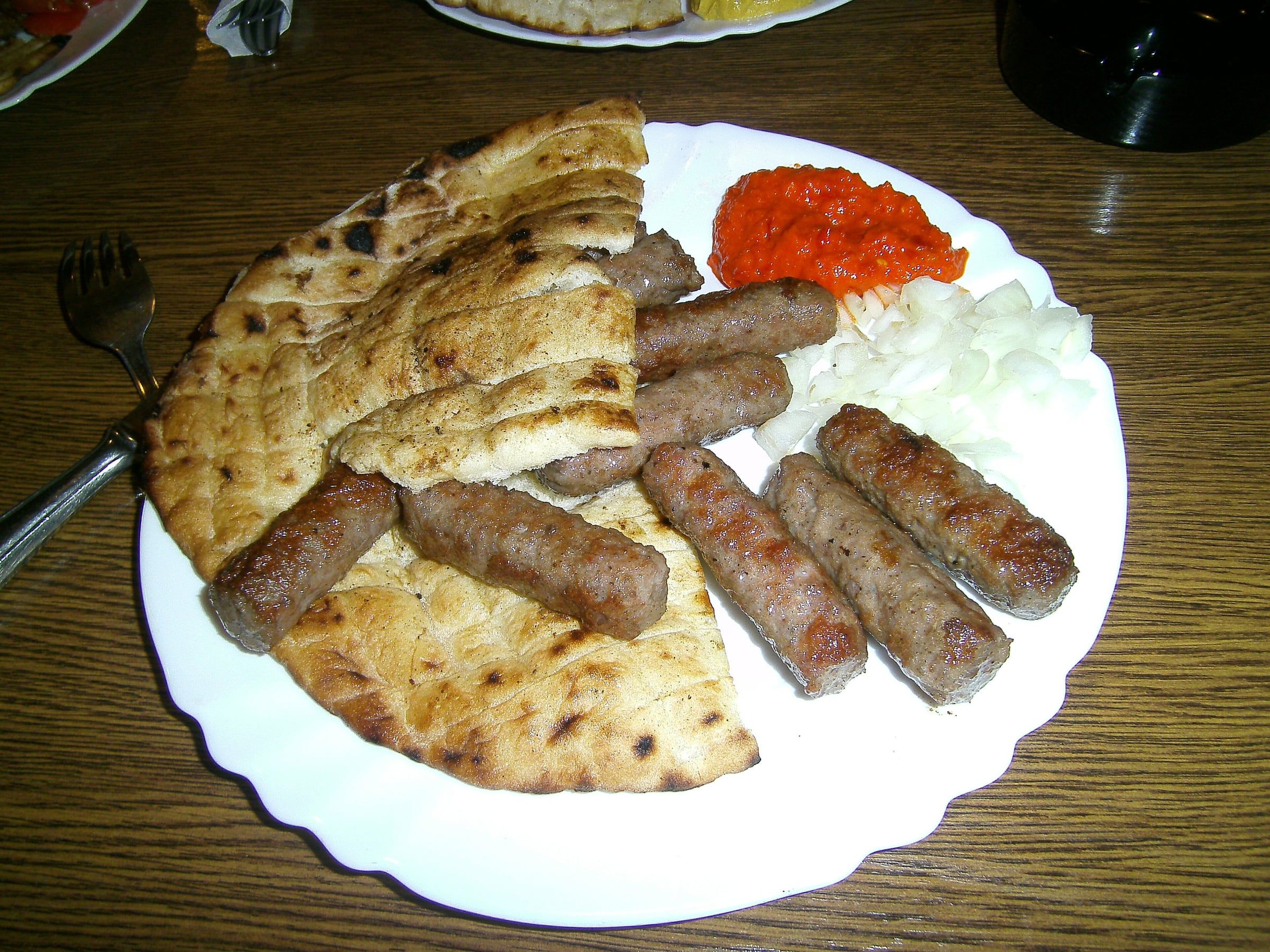
Ćevapi (said roughly “cheh-VAH-pee”) are small grilled links of minced meat, made from a lamb and beef mix. They are the dish most people mean when they say “Bosnian food”.
The usual serving is a portion of five or ten links tucked into somun, the soft Bosnian flatbread, with raw chopped onion alongside. You will often also get kajmak, a thick, salty dairy cream, and ajvar, a relish made from roasted red peppers.
Regional versions differ. Wikivoyage notes that the Sarajevo and Banja Luka styles are not the same, and in Herzegovina you will find your own local variation at each grill. Do not expect a single standard. Pick a place that is busy at lunchtime and the links will be freshly cooked.
Grills, here and around the Old Bridge, price in Bosnian marks (KM). See money and currency for how the mark works.
Burek and the other pita
In Bosnia, burek is a particular thing: a flaky pastry filled with minced meat, rolled into a spiral and cut into wedges. If you ask for “burek” and nothing else, you get the meat version.
The same pastry with other fillings is called pita, a word that covers the whole family. The ones to know:
- Sirnica: filled with cottage cheese.
- Zeljanica: spinach and cheese.
- Tikvenjača: squash or courgette.
- Krompiruša: potato.
The cheese, spinach, squash and potato versions have no meat in the filling, though it is worth asking if you are strict about it. A slice makes a cheap breakfast or snack. Wikivoyage warns that quality varies and that pita can be greasy. Look for pastry that is crisp at the edges and has been made that morning.
Stews and stuffed vegetables
Beyond the grill, the home-style food of the country is slow-cooked. Two dishes are easy to find and worth the time they take:
- Sogan-dolma: onions stuffed with minced meat and herbs.
- Sarma: meat and rice wrapped in pickled cabbage leaves.
Both are cooked until soft and served hot, often with bread. They are filling, so one portion is a full meal. If you are visiting in cold weather, they are the best answer to a wet Neretva evening.
Your restaurant may call these “dolma” or “sarma” on an English menu. Waiters can usually explain what the daily dish is, and the language and phrases page covers the words you need to ask.
Sweets: baklava, tufahija and hurmašica
Bosnian puddings are sweet, and a lot of them sit in syrup.
- Baklava: the layered nut pastry found across the former Ottoman world. The cuisine page lists it under desserts.
- Tufahija: a whole apple, stewed and then stuffed with a walnut filling.
- Hurmašica: a date-shaped pastry soaked in sweet syrup.
Tufahija is the lightest of the three and the one to order if you want something after a big plate of meat. Hurmašica and baklava are better with coffee, which cuts the sugar. See our guide to Bosnian coffee for how that is made and served.
What is particular to Herzegovina
Mostar is in Herzegovina, the southern part of the country, and two things set it apart on the table.
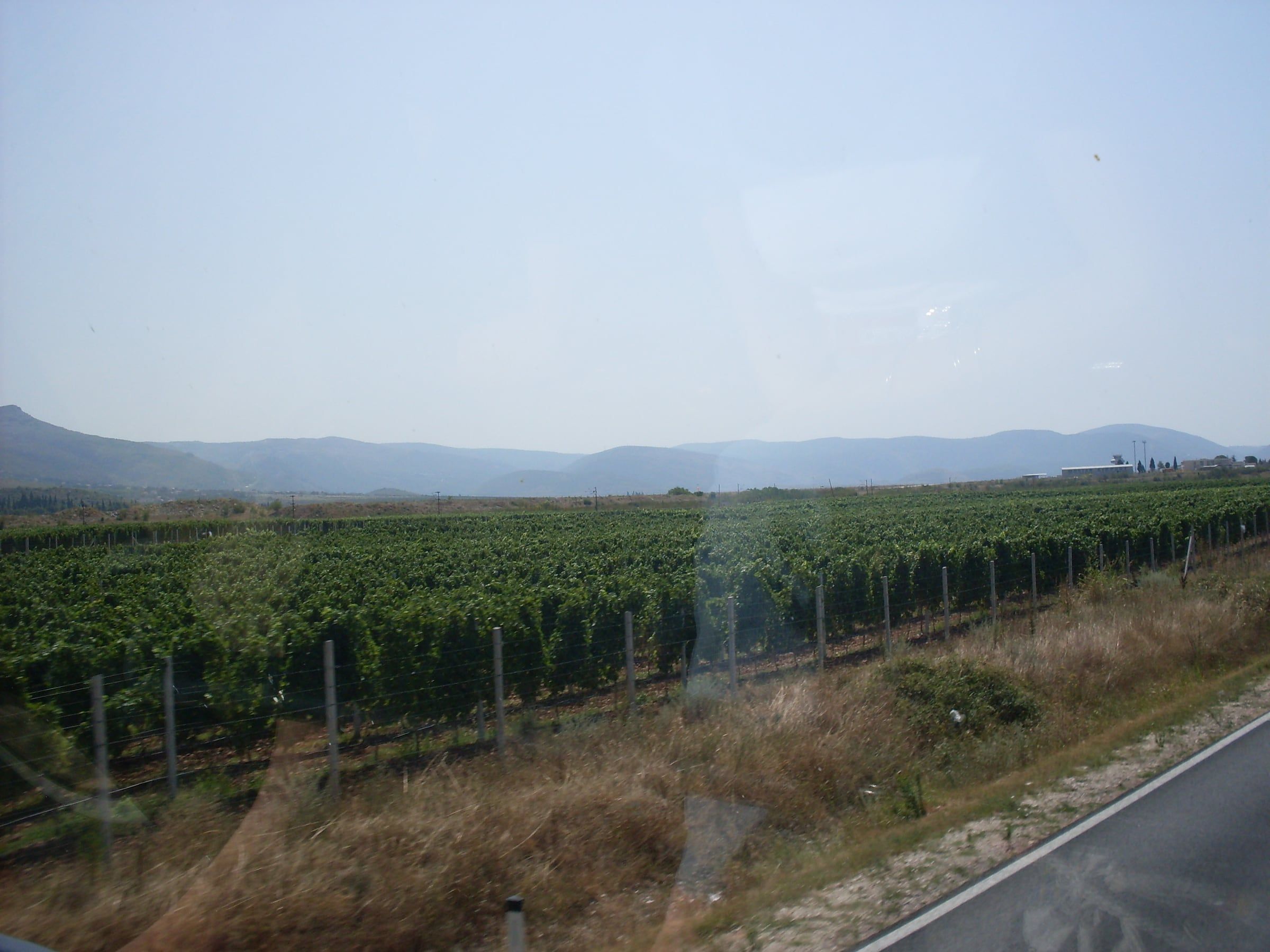
The first is wine. The cuisine article states that the best local wines come from Herzegovina because of its climate, and names Mostar, Čitluk, Ljubuški, Stolac, Domanovići and Međugorje as wine places. The main local grapes are Žilavka (white) and Blatina (red). Our Herzegovina wine page covers both.
The second is cheese. The same page describes “cheese in sack”, cheese aged in a sheep’s skin, usually made in Herzegovina. It is a strong, regional product and not for everyone. Ask whether a restaurant has it rather than expecting it on every menu.
We have not verified that figs, pomegranates or cured ham are Herzegovinian specialities, so we do not list them here.
Drinks: coffee, wine and rakija
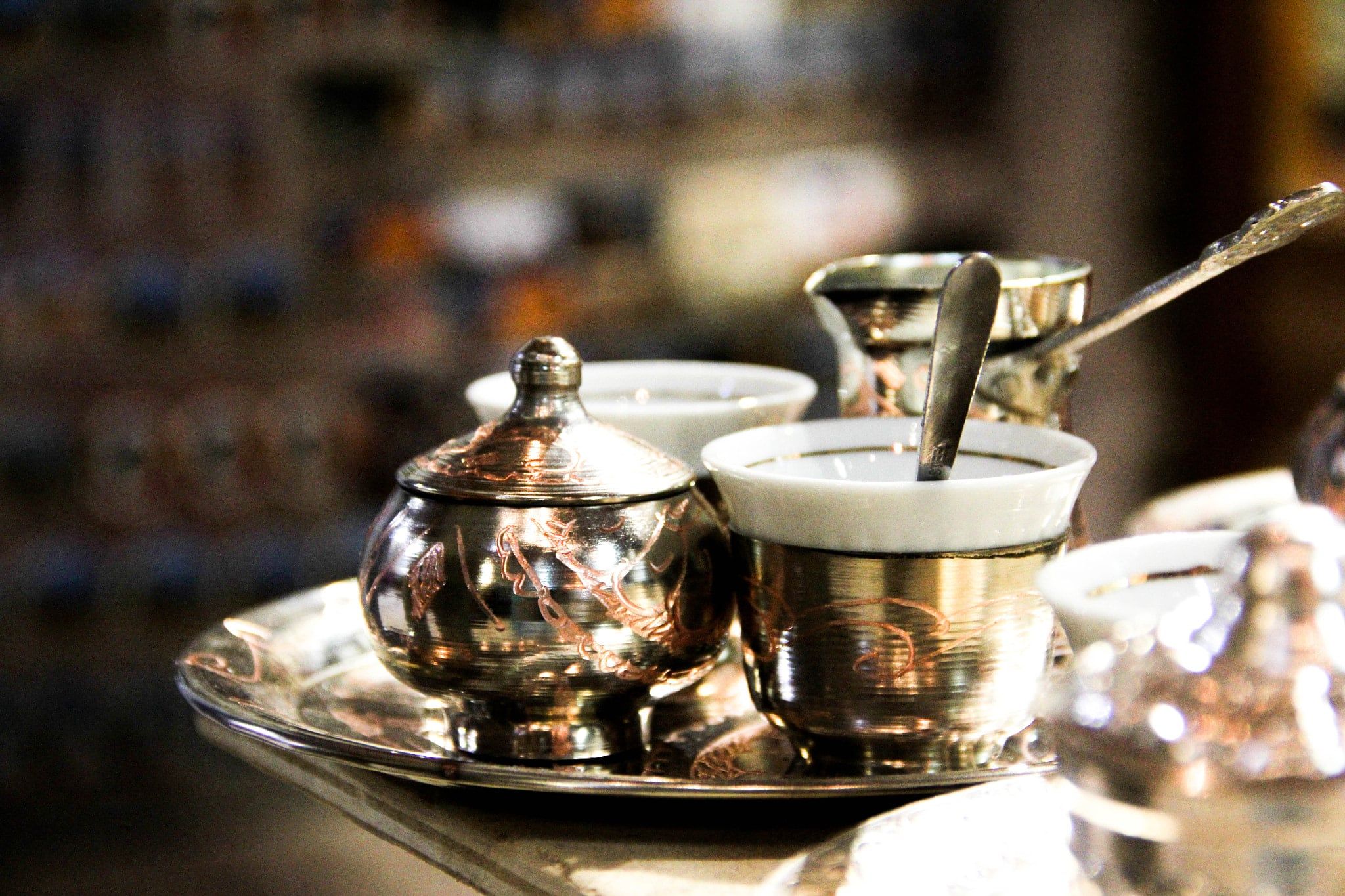
Coffee is the daily ritual. It is brewed in a small pot called a džezva and poured into a small cup, and people sit over it for a long time. Our page on Bosnian coffee explains how to order it and how it differs from Turkish coffee.
Wine is made in the countryside around Mostar. Žilavka is a white grape grown mainly in Herzegovina and planted principally in the Mostar region. Blatina is a red grape from the same area. If you want to taste before you buy, the tour above includes an optional wine tasting.
Rakija is the local fruit brandy. The one specific type we can confirm is lozovača, a grape rakija, which the Tvrdoš monastery near Trebinje lists among its products. We have not verified other styles, so we leave them out. See Herzegovina wine for the rest.
Where to find food in the Old Town
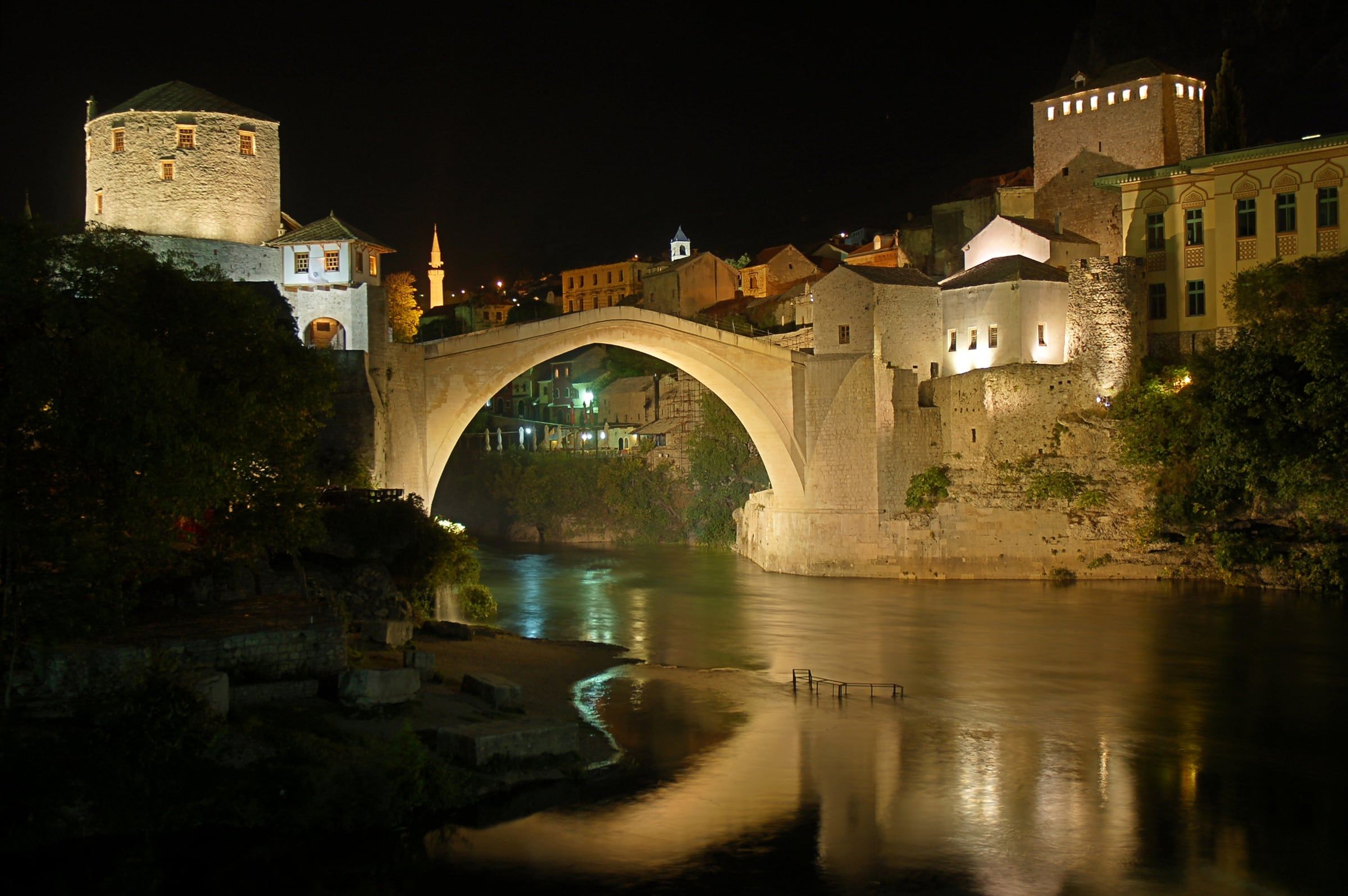
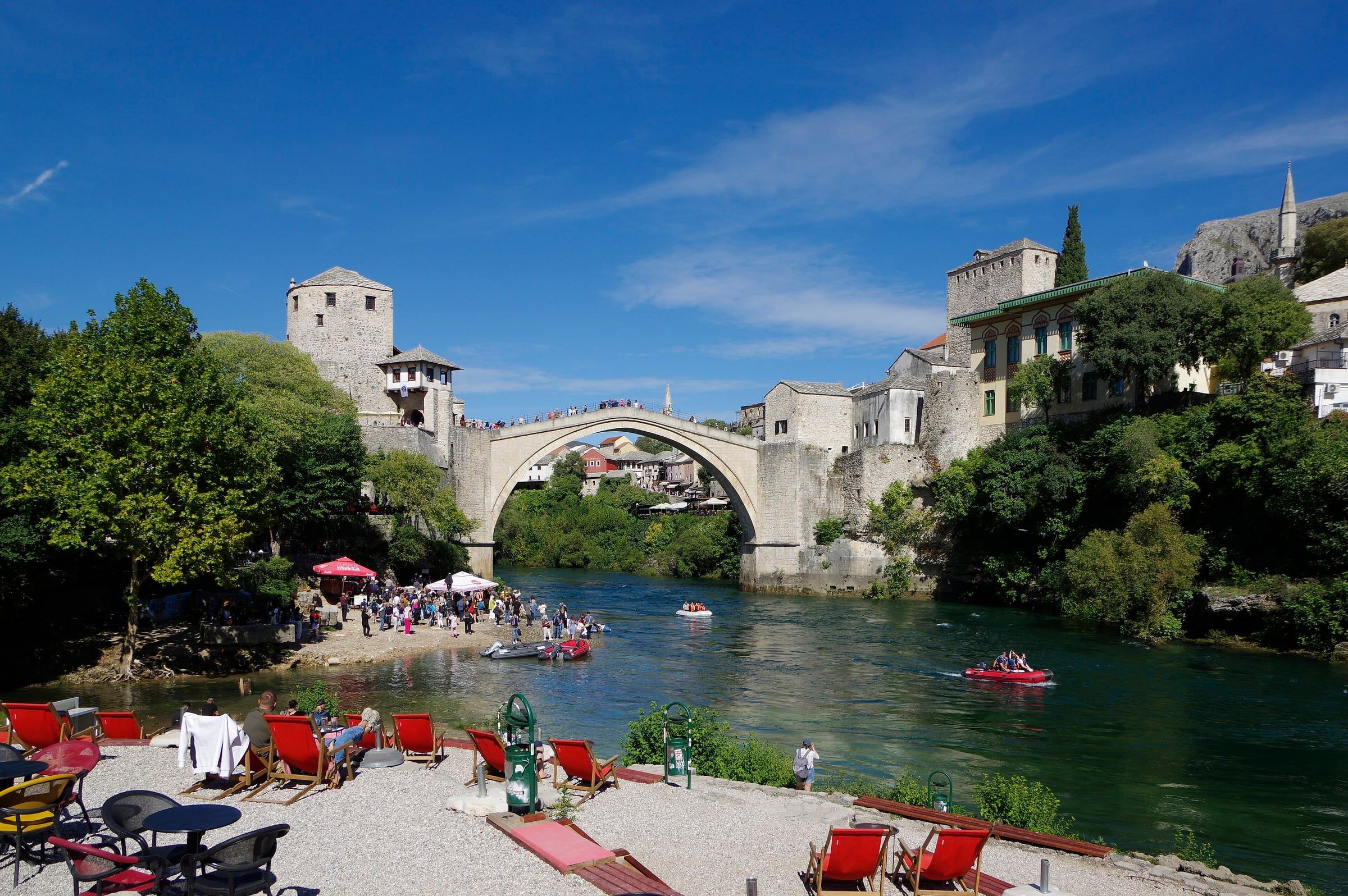
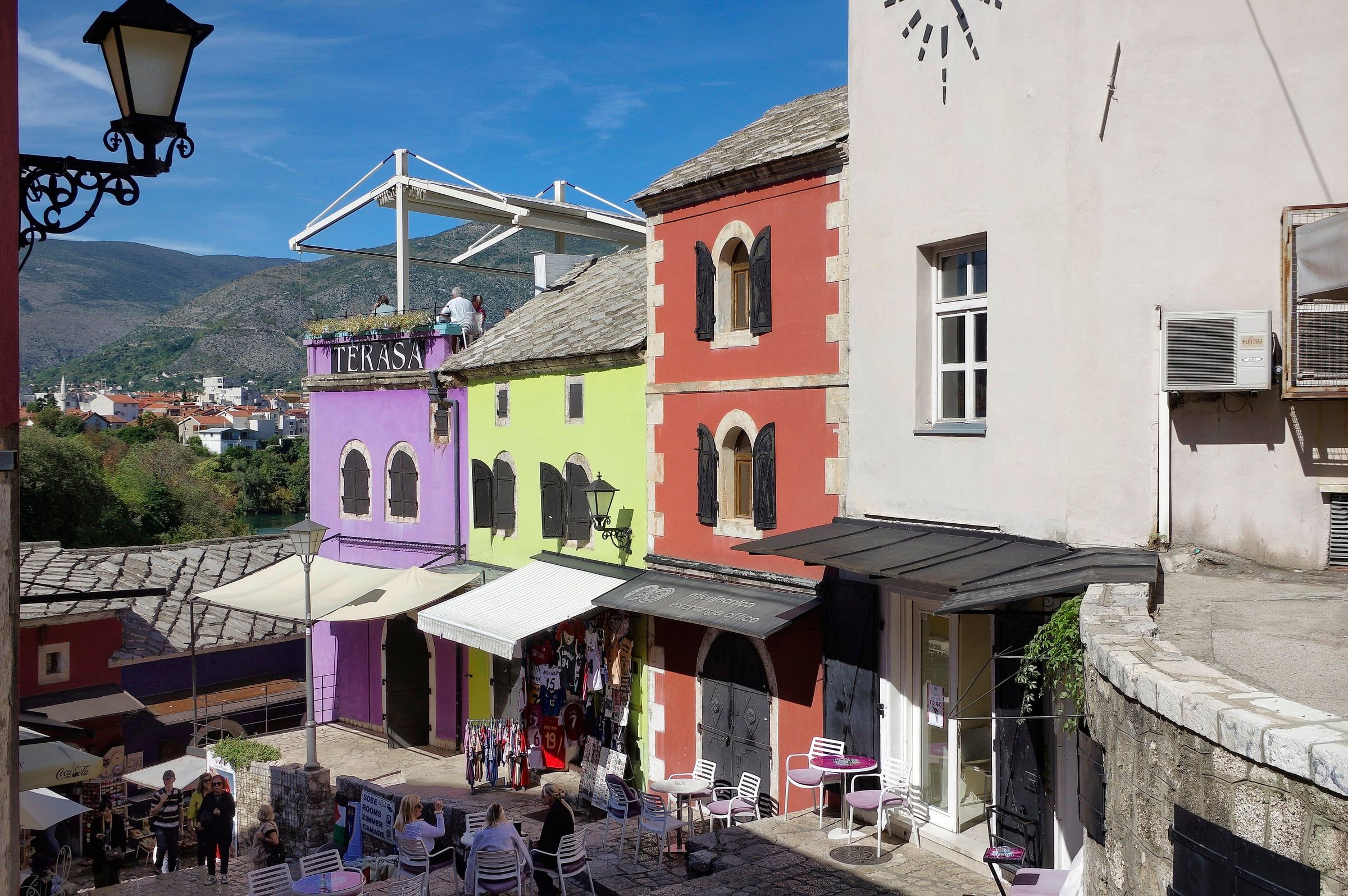
In general terms, the lanes around the bazaar street Kujundžiluk and the riverbanks near the Old Bridge are where grills, bakeries and cafés are concentrated. The bridge-view terraces charge for the view, so you pay less one or two streets back. A bakery is a quick breakfast. A grill is a lunch.
Where to eat in Mostar goes through the kinds of place in more detail, without naming restaurants, since menus, prices and owners change. The Old Town guide shows how the lanes fit together, and the itinerary shows where a meal fits into a day.
If you are staying overnight, where to stay covers neighbourhoods, and nearby lists the day trips that suit a long lunch, including Blagaj.
A sample day of eating
If you want a plan, here is one that uses only what this page covers. It is a suggestion, not a fixed route.
- Morning: a slice of pita, such as zeljanica or sirnica, from a bakery. It is cheap, filling and quick, and it keeps you going until lunch.
- Midday: ćevapi in somun with onion, at a grill that is busy. Add kajmak if you like rich food.
- Afternoon: coffee and one sweet. Tufahija is lighter than baklava, and hurmašica is the sweetest of the three.
- Evening: sarma or sogan-dolma if you want something home-style, or grilled meat with a glass of Žilavka or Blatina.
Day trippers rarely have time for all four. If you only have a few hours in town, pick lunch and coffee, and leave the rest for another visit. The Mostar itinerary shows where the stops fall.
Ordering and eating etiquette
Our sources do not cover table manners, so we keep this to the practical side. Bread is part of the dish, so use it. Ćevapi and pita are finger food in most casual places. In a sit-down restaurant, ask for the menu in English if you need it and check the price of anything described as “daily”. If you are unsure what a word means, point and ask. Most staff in tourist areas deal with this question many times a day.
A few words help. “Ćevapi” are the grilled links, “burek” is the meat pastry, “pita” is the general word for the pastry family, and “kafa” is coffee. The language and phrases page has the rest.
Practical notes
- Cash: small places often prefer cash in Bosnian marks. See money and currency.
- Prices: the figures quoted from Wikivoyage are undated and indicative. Check the menu before you order.
- Allergies and diet: say clearly that you do not eat meat or have an allergy, and check whether the pastry or stew contains meat stock.
- Tipping: we have not verified local practice, so ask your hotel or guide.
- Opening hours: bakeries and grills tend to keep their own hours. We have not verified any, so check at the door.
- Tours: a short guided walk can include a tasting. Check what is included before you book.