Which language do people speak?
The language of Mostar and the rest of Bosnia and Herzegovina is usually described as Bosnian, Croatian and Serbian. These are closely related and speakers understand one another, so a phrase you learn in one will usually work with everyone you meet. The country’s constitution names no official languages. According to Wikipedia, which notes that its own citation for this is missing, a Constitutional Court ruling of 2000 gave the three equal status.
The names are a sensitive subject, because language is tied up with identity here. As a visitor you do not need to settle it. Use the words in this guide, listen to what people say to you, and follow their lead. For the history behind that sensitivity, see the war history page.
For a wider look at the trip, start with practical information.
Latin and Cyrillic
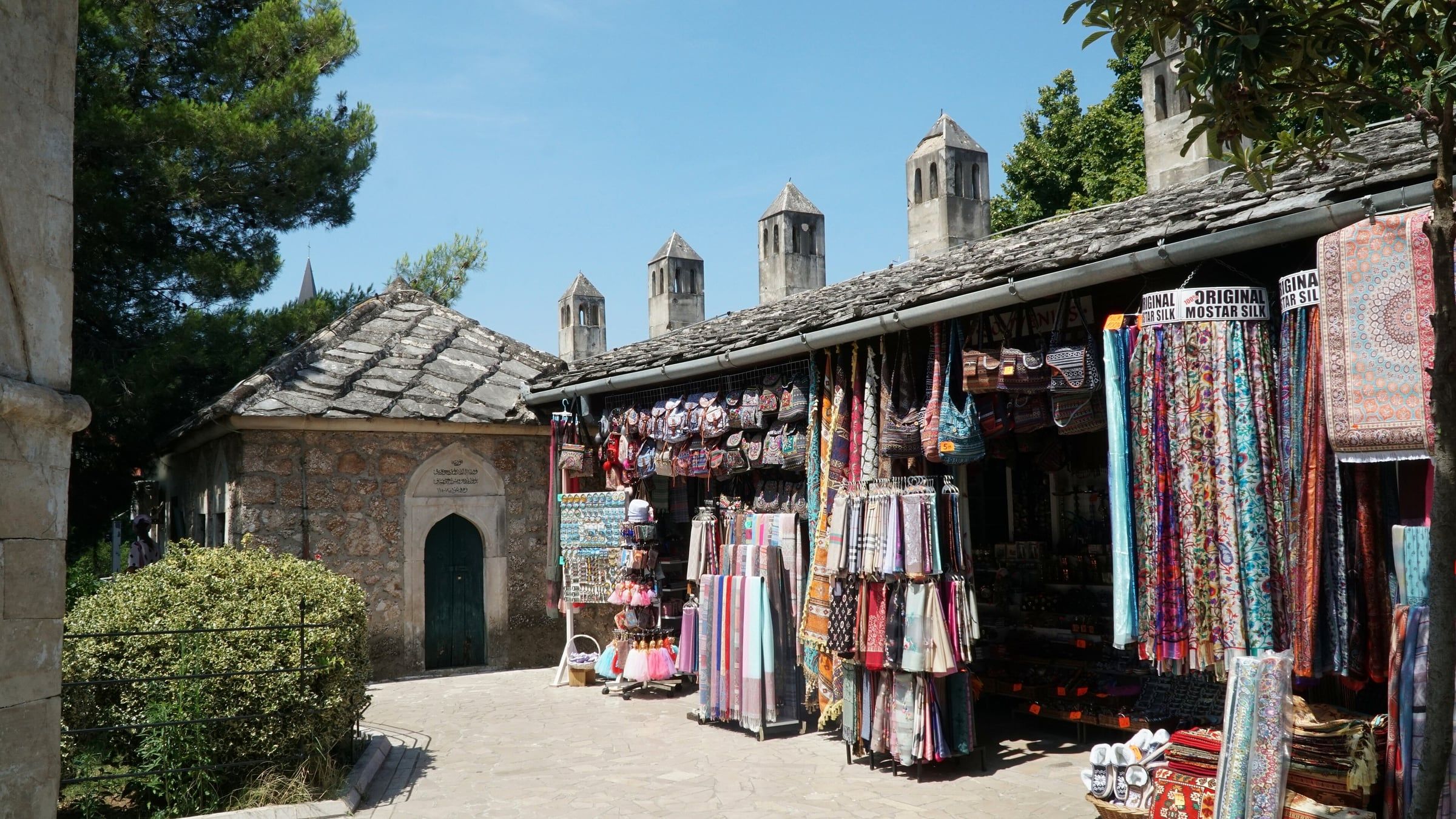
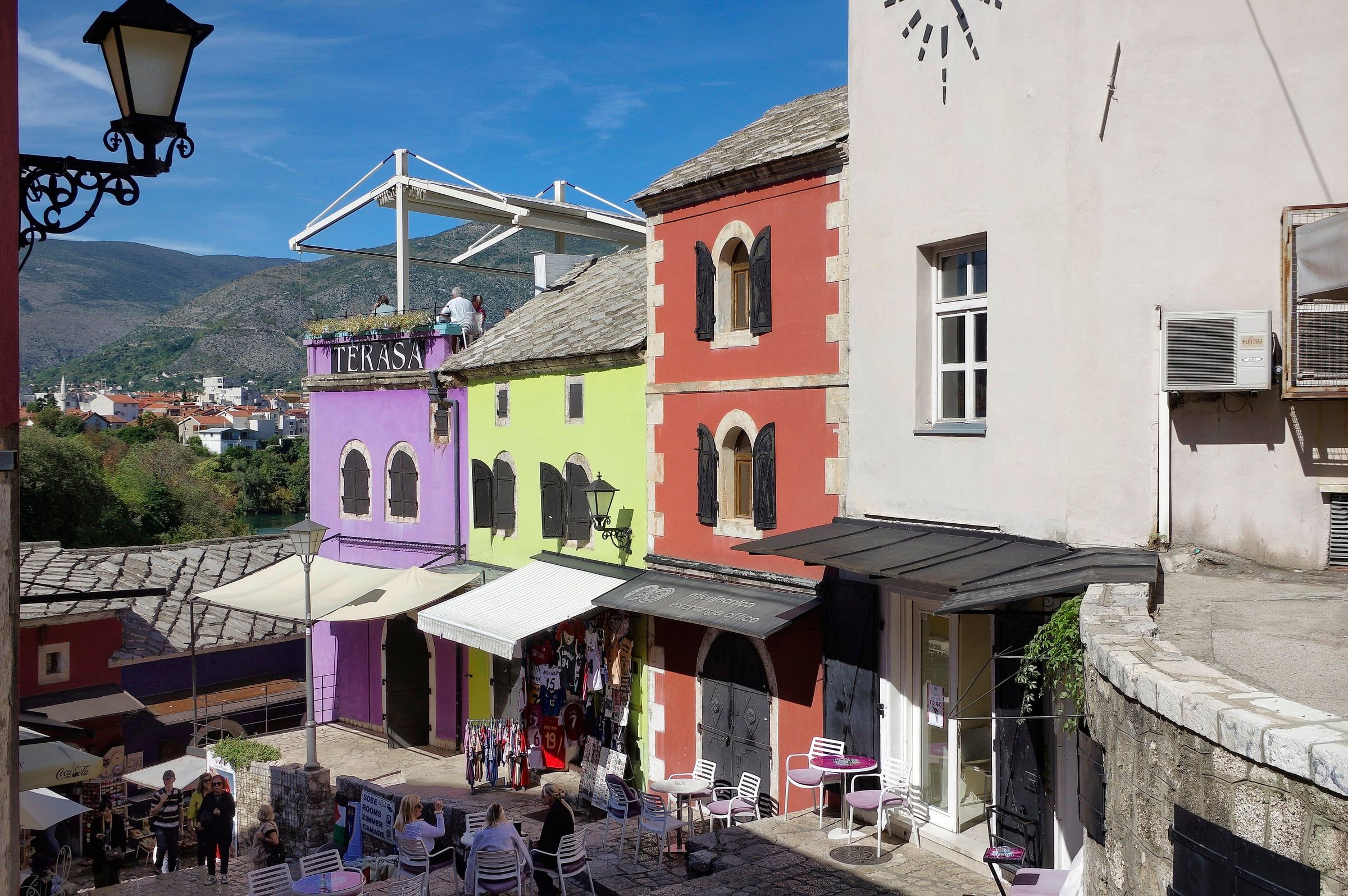
Bosnian and Serbian can be written in either the Latin or the Cyrillic alphabet. Croatian is written in Latin only. Both scripts appear around the country, but Latin is far more common, and you will mostly read Latin in Mostar. Menus, street signs and shopfronts in the old town are in Latin.
If you do meet Cyrillic, a photo of the sign lets you check it later against a map or a translation app, which is a practical way to cope.
English
This guide cannot tell you how widely English is spoken in Mostar, because we have no source for it. The sensible approach is to learn a few words anyway. People respond well to an attempt at the local language, and the phrases below cost nothing. The phrase for “do you speak English?” is in the table, which is more polite than starting in English without asking.
How to say it
The language uses a few letters that English does not. Wikivoyage’s pronunciation guide gives these:
- č sounds like “ch” in church
- š sounds like “sh”
- ž sounds like the “s” in measure
In the table, capital letters in the hint show the stressed part. These are rough guides, not a substitute for listening to a native speaker.
Phrases for a visit
| Phrase | Pronunciation hint | Meaning |
|---|---|---|
| Dobar dan | DOH-bar dahn | Good day |
| Dobro jutro | DOH-bro YOO-tro | Good morning |
| Zdravo / ćao | ZDRAH-vo / chow | Hello (informal) |
| Hvala | HVAH-lah | Thank you |
| Molim | MOH-leem | Please |
| Da | dah | Yes |
| Ne | neh | No |
| Oprostite | oh-PRO-stee-teh | Excuse me, to get attention |
| Izvinite | eez-VEE-nee-teh | Sorry, pardon |
| Koliko je ovo? | KOH-lee-ko yeh OH-vo | How much is this? |
| Račun, molim | RAH-choon, MOH-leem | The bill, please |
| Da li govorite engleski? | dah lee go-VOH-ree-teh en-GLEH-skee | Do you speak English? |
| Ne razumijem | neh rah-ZOO-mee-yem | I don’t understand |
| Gdje je…? | g-dyeh yeh | Where is…? |
| Gdje je WC? | g-dyeh yeh veh-TSEH | Where is the toilet? |
| Upomoć! | oo-POH-moch | Help! |
| Do viđenja | doh VEE-jen-yah | Goodbye |
| Pivo | PEE-vo | Beer |
The hints are English approximations of our own. For the toilet, you will also see “WC” written on doors. We have left out the word for coffee, because the sources we checked disagree on the spelling. Pointing at the menu is easy enough.
Using the phrases
Greet people first. In a shop, café or guesthouse, “Dobar dan” before you ask for anything is polite, and “Hvala” when you leave is normal. Say “Molim” when you ask for something and when you are handing something over.
“Oprostite” is the phrase for getting a waiter’s or a stranger’s attention. “Izvinite” is for apologising when you bump into someone. If you are lost, “Gdje je…?” followed by the name of a place, and a hand pointing at your map, is enough. The old bridge and the old town have their own guides if you need directions.
If someone replies faster than you can follow, “Ne razumijem” is honest and fine. Then ask “Da li govorite engleski?” and see what happens.
Reading signs and menus
A few habits help when you are getting around:
- Shops and cafés. Prices are shown in KM, the local currency. The money and currency page covers cash and cards.
- Warnings. A red sign reading “Opasnost od mina” means danger from mines. Do not go past it. The is Mostar safe page explains what to do.
- Station boards. Departures use local spellings of place names, so check your ticket against the board rather than relying on the English version.
- Letters with marks. Learn č, š and ž from the list above and you can read many place names aloud.
If you are planning a day out, the getting there guide lists the station names and the stops you will see on your tickets.