Why this is the mosque to visit
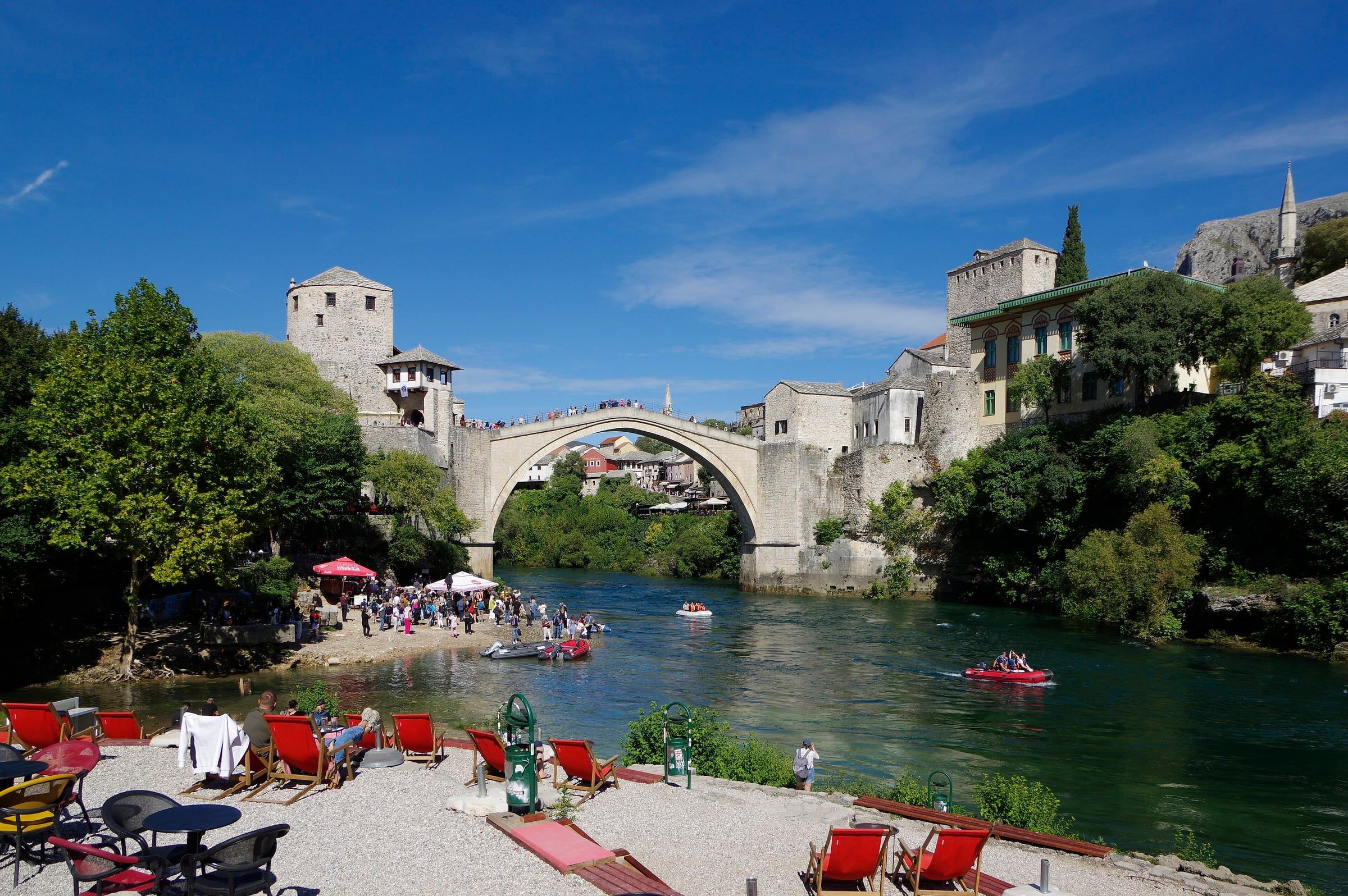
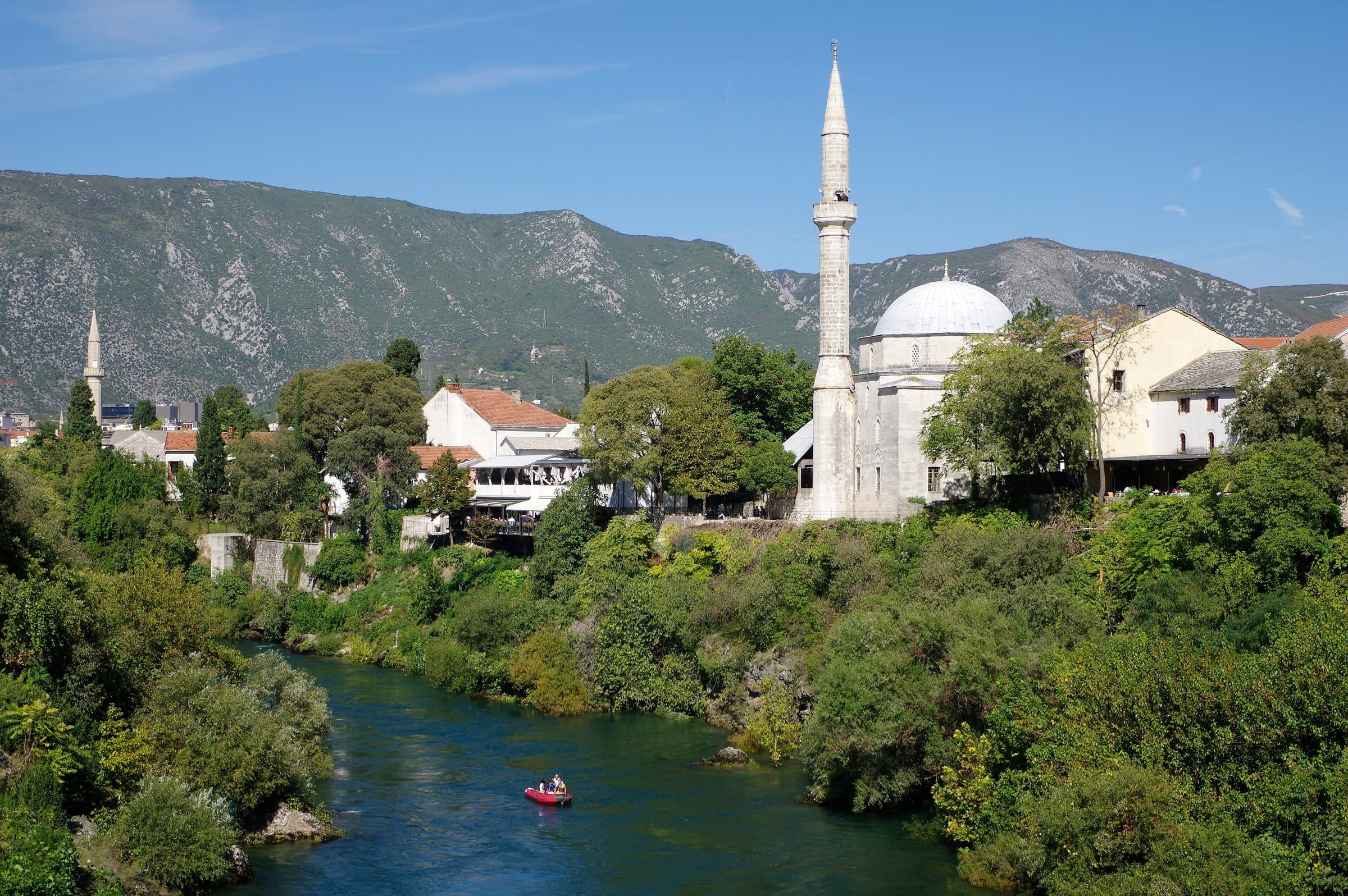
Mostar has several mosques, but this is the one most visitors see. It stands on the left bank of the Neretva, about 150 m north of the Old Bridge, between the river and the bazaar street of Kujundžiluk. You walk past its courtyard on the way up from the bridge, so it costs nothing to look. The question is whether to pay to go in and up.
Our view: pay once, for the minaret. The lanes of the Old Town are free and the bridge is best seen from the bank, but the minaret is the only paid viewpoint here, and it gives you a height the rest of the town does not.
The fee, and why the figures disagree
A March 2026 guide gives about 10 KM (about EUR 5) for the interior and minaret together, with the courtyard free. We have not found an official page that states a price. Some visitor reviews quote EUR 10 for the interior and EUR 15 if you add the minaret, which is well above the other figure. We cannot tell which is current, or whether prices have changed.
Plan on the higher figure and be pleasantly surprised if it is lower. Ask what the ticket includes before you hand over money, and say whether you want the minaret.
Pay in cash. A KM is the convertible mark, pegged at 1.95583 to the euro, and our money and currency page covers cash and cards. We have not confirmed that the mosque takes cards.
Hours
The same March 2026 guide gives roughly 08:00 to 19:00 in summer and says hours shift with the season. That is a secondary source, not the mosque, so use it only to judge whether a visit is likely to work. Arriving mid-morning in summer sits comfortably inside that window. In other months, check on the day.
The minaret climb
The minaret is stone and 29.90 m tall, not counting the finial on top. The Bosnian Wikipedia article counts 78 stone steps. It is attached to the side of the main building, and the way in is from inside the prayer space, which is why the climb and the interior come as one visit.
The view is the point. You look across the river towards the bridge and over the roofs of the Old Town. We have not verified a limit on numbers or any restrictions, so expect a narrow stair and do not count on having it to yourself. If the stair does not suit you, the courtyard terrace is a free alternative for a photograph of the bridge.
What you see inside
Visitors enter a single domed room. The dome is 10 m across and its crown is 15.25 m above the floor. Of all the mosques in Mostar, only three have domes (Karađoz Bey, Nesuh-aga Vučjakovića and this one). The rest have timber roofs.
The painted decoration on the dome is worth looking up at. Between the windows there are eight painted trees: pomegranate, lemon, olive, pear, date palm, cherry, vine and orange. The article says much of the wall painting had decayed and was reconstructed on a new base, in natural colours on a beige ground. So what you see is a careful rebuild of the original scheme, not untouched old paint.
Above the main door there is a verse inscription in Turkish on a stone slab recording the building of the mosque.
The courtyard
Free to enter, the courtyard is worth five minutes even if you pay for nothing. It has stalls hung with rugs and scarves, and two older features sit in it.
The first is a covered fountain, a šadrvan, which an inscription dates to 1781. The Bosnian Wikipedia article says it is one of two surviving fountains of this kind in Mostar (it says there were five), the other being beside the Karađoz Bey madrasa. The second is the small tomb (turbe) of Sheikh Ishak, which was moved into the courtyard in 1965 when a cemetery was cleared. The article says there is no reliable historical information about the sheikh.
A short history
Koski Mehmed Pasha was born in Mostar. He served as a chronicler to the grand vizier and later as a military treasurer, and he died in 1611. His brother Mahmud completed the mosque, and English Wikipedia gives 1617 as the year it was built. The endowment document also mentions a hanikah, a dervish lodge, and the pasha left property in and around Mostar to pay for the upkeep of both.
The lodge was part of a madrasa (a religious school) that stood beside the mosque. The article says it closed in 1924 and was demolished in 1951, with a small park built in its place. The mosque, madrasa, fountain, tomb and courtyard together were declared a national monument of Bosnia and Herzegovina in January 2004.
We have not added a completion date or any details of the 1990s war here, because the sources we checked for this page do not support them. Our Old Town guide and war history page cover the wider story.
Visiting respectfully
It is a working place of worship. Dress modestly, keep your voice down and follow any signs at the door.
Fitting it into your day
Allow 30 to 45 minutes, including the minaret and a look round the courtyard. It sits naturally between the bridge and the bazaar. Our Mostar itinerary puts it in an order with the rest of the day, and the Old Town guide lists the other paid sights if you want to compare them.